
CDM College Health Education Series
What is Iron Deficiency Anaemia?
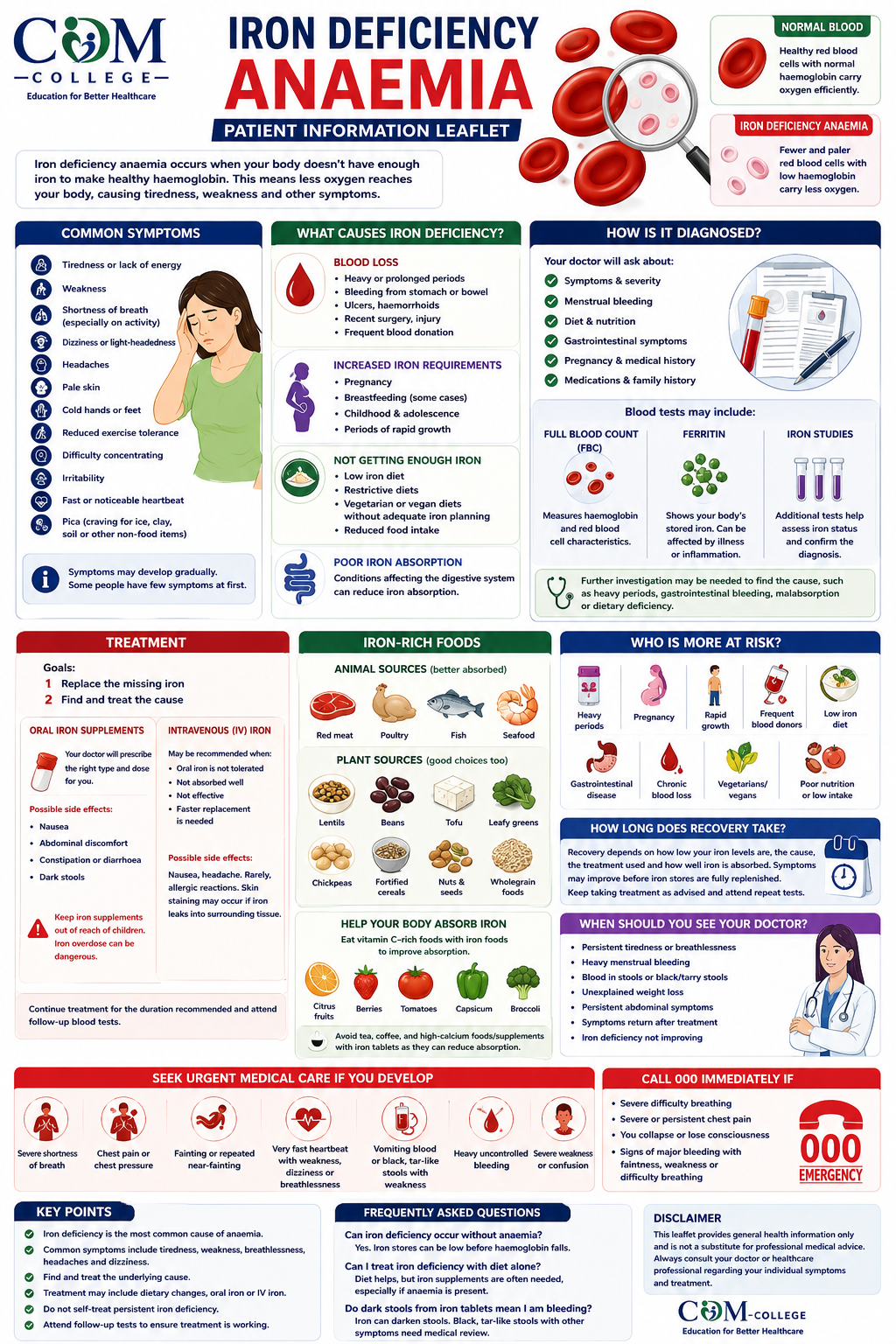
Iron deficiency anaemia occurs when your body does not have enough iron to make sufficient healthy haemoglobin.
Haemoglobin is the part of red blood cells that carries oxygen around the body. When haemoglobin is low, less oxygen reaches your muscles and organs, which may cause tiredness, weakness, shortness of breath and other symptoms. Iron deficiency is the most common cause of anaemia.
Iron deficiency can occur before anaemia develops, meaning a person may have depleted iron stores even while their haemoglobin level is still normal.
Common Symptoms
Iron deficiency may develop gradually. Some people have few symptoms at first.
Common symptoms include:
- Tiredness or lack of energy
- Weakness
- Shortness of breath, especially during activity
- Dizziness or light-headedness
- Headaches
- Pale skin
- Cold hands or feet
- Reduced exercise tolerance
- Difficulty concentrating
- Irritability
- Fast or noticeable heartbeat
- Chest discomfort in severe cases
Some people may also develop pica, an unusual craving for or consumption of non-food substances such as ice, clay or soil.
What Causes Iron Deficiency?
Finding why your iron level is low is important. Treatment should address both the iron deficiency and its underlying cause.
Common Causes Include
Blood Loss
- Heavy or prolonged menstrual periods
- Bleeding from the stomach or bowel
- Stomach or bowel ulcers
- Haemorrhoids
- Recent surgery or injury
- Frequent blood donation
- Other chronic or hidden blood loss
Increased Iron Requirements
Iron requirements increase during:
- Pregnancy
- Breastfeeding in some circumstances
- Childhood and adolescence
- Periods of rapid growth
Not Getting Enough Iron
This can occur with:
- A diet low in iron-rich foods
- Poorly planned restrictive diets
- Vegetarian or vegan diets without adequate iron planning
- Reduced food intake
Poor Iron Absorption
Some conditions may reduce iron absorption, including gastrointestinal disease and other disorders affecting the digestive tract.
Who is More at Risk?
Iron deficiency is more common among:
- People with heavy menstrual bleeding
- Pregnant people
- Adolescents during rapid growth
- Frequent blood donors
- People with gastrointestinal disease
- People experiencing chronic blood loss
- People with restricted diets
- Vegetarians and vegans who do not obtain adequate dietary iron
- People with poor nutrition or reduced food intake
How is Iron Deficiency Anaemia Diagnosed?
Your healthcare professional may ask about:
- Your symptoms
- Menstrual bleeding
- Your diet
- Gastrointestinal symptoms
- Recent surgery
- Blood donation
- Pregnancy
- Medicines
- Family and medical history
Blood tests may include:
Full Blood Count (FBC)
Measures haemoglobin and characteristics of the red blood cells.
Ferritin
Ferritin helps assess the body’s stored iron and is commonly used when investigating iron deficiency. Interpretation can be affected by inflammation and some other illnesses, so the result should be considered in the clinical context.
Iron Studies
Additional tests may be ordered to help assess iron status and clarify the diagnosis.
Further Investigation May Be Needed
Iron deficiency should not automatically be assumed to be caused by poor diet.
Depending on your age, symptoms and medical history, your doctor may investigate for:
- Heavy menstrual bleeding
- Gastrointestinal blood loss
- Malabsorption
- Dietary deficiency
- Other medical conditions
Further tests are selected according to the individual clinical situation.
Treatment
Treatment usually has two goals:
- Replace the missing iron
- Find and treat the cause of the deficiency
Treatment may include dietary changes, oral iron supplements, or intravenous iron in selected patients.
Oral Iron Supplements
Your doctor may recommend an oral iron preparation.
The exact product, strength, dose and frequency should be individualised according to your needs and your doctor’s advice.
Possible side effects include:
- Nausea
- Abdominal discomfort
- Constipation
- Diarrhoea
- Dark stools
Do not stop treatment without discussing troublesome side effects with your healthcare professional, as changing the preparation or dosing strategy may sometimes help.
Keep iron supplements out of the reach of children. Iron overdose can be dangerous.
Intravenous Iron Infusion
Some people may require iron given through a vein.
An IV iron infusion may be considered when:
- Oral iron is not tolerated
- Oral treatment has not worked adequately
- Iron is not being absorbed properly
- Faster iron replacement is clinically required
- There are substantial iron requirements
Possible adverse effects include nausea and headache. Rarely, allergic reactions can occur. Skin staining can also occur if iron leaks into the tissue around the injection site.
Attend all follow-up blood tests and medical reviews recommended after treatment.
Iron-Rich Foods
Diet can help maintain healthy iron intake and support treatment.
Animal Sources
- Lean red meat
- Poultry
- Fish
- Seafood
Plant Sources
- Lentils
- Beans
- Chickpeas
- Tofu
- Iron-fortified cereals
- Wholegrain foods
- Nuts and seeds
- Green leafy vegetables
Iron from animal and plant foods is absorbed differently, and absorption from plant sources is generally lower.
Helping Your Body Absorb Iron
Including vitamin C-rich foods alongside iron-containing meals may support dietary iron absorption.
Examples include:
- Oranges and other citrus fruits
- Kiwi fruit
- Berries
- Tomatoes
- Capsicum
- Broccoli
A balanced eating pattern remains important, and dietary strategies should complement—rather than replace—prescribed treatment for confirmed iron deficiency anaemia.
How Long Does Recovery Take?
Recovery depends on:
- How low your iron and haemoglobin levels are
- The underlying cause
- The type of treatment used
- Whether ongoing blood loss continues
- How well iron is absorbed
Symptoms may improve before the body’s iron stores are fully replenished. Continue treatment for the duration recommended by your clinician and attend repeat blood tests as advised.
When Should I See My Doctor?
Arrange a medical review if you have:
- Persistent tiredness
- Breathlessness on exertion
- Recurrent dizziness
- Reduced exercise tolerance
- Heavy menstrual bleeding
- Blood in your stool
- Black or tar-like stools
- Unexplained weight loss
- Persistent abdominal symptoms
- Symptoms returning after previous iron treatment
- Iron deficiency that does not improve with treatment
Anaemia can have many causes, and proper assessment is important.
Seek Urgent Medical Care If You Develop
🚨 Severe shortness of breath
🚨 Chest pain or chest pressure
🚨 Fainting or repeated near-fainting
🚨 A very fast heartbeat with weakness, dizziness or breathlessness
🚨 Vomiting blood
🚨 Black, tar-like stools with weakness or dizziness
🚨 Heavy uncontrolled bleeding
🚨 Severe weakness or confusion
These symptoms may indicate severe anaemia, significant bleeding or another serious medical condition requiring urgent assessment.
Call 000 Immediately If
- You have severe difficulty breathing.
- You have severe or persistent chest pain.
- You collapse or lose consciousness.
- You have signs of major bleeding with faintness, weakness or difficulty breathing.
Help Shape the Future of Healthcare
Your donation enables CDM College to educate healthcare professionals, develop evidence-based learning, support scholarships, and improve the quality of chronic disease care for communities worldwide.
❤️ Donate SecurelyKey Points
- Iron deficiency anaemia occurs when insufficient iron reduces the body’s ability to make healthy haemoglobin.
- Common symptoms include tiredness, weakness, breathlessness, headaches and dizziness.
- The underlying cause of iron deficiency should be investigated.
- Treatment may include dietary changes, oral iron or IV iron.
- Do not self-treat persistent iron deficiency without medical assessment.
- Attend follow-up blood tests to check whether treatment is working and iron stores are recovering.
Frequently Asked Questions
Can iron deficiency occur without anaemia?
Yes. Iron stores may become depleted before haemoglobin falls below the normal range. Symptoms and test results need to be interpreted by your healthcare professional.
Can I treat iron deficiency with diet alone?
Increasing dietary iron can be helpful, but established iron deficiency anaemia often requires iron replacement therapy as well as investigation and management of the underlying cause.
Does dark stool from an iron tablet mean I am bleeding?
Iron supplements can darken stools. However, black, tar-like stools accompanied by weakness, dizziness or other concerning symptoms need prompt medical assessment.
Should I take iron without a blood test?
Long-term iron supplementation should generally be guided by appropriate assessment, because tiredness and anaemia can have causes other than iron deficiency.
Disclaimer
This leaflet provides general health information only and is not a substitute for professional medical advice, diagnosis or treatment. Always consult your doctor or healthcare professional regarding your individual symptoms and treatment.
For severe breathing difficulty, chest pain, collapse or major bleeding, call 000.
CDM College
Education for Better Healthcare
Help Shape the Future of Healthcare
Your donation enables CDM College to educate healthcare professionals, develop evidence-based learning, support scholarships, and improve the quality of chronic disease care for communities worldwide.
❤️ Donate Securely
Help Shape the Future of Healthcare
Your donation enables CDM College to educate healthcare professionals, develop evidence-based learning, support scholarships, and improve the quality of chronic disease care for communities worldwide.
❤️ Donate Securely
Leave a Reply