
CDM College Health Education Series
What is Irritable Bowel Syndrome (IBS)?
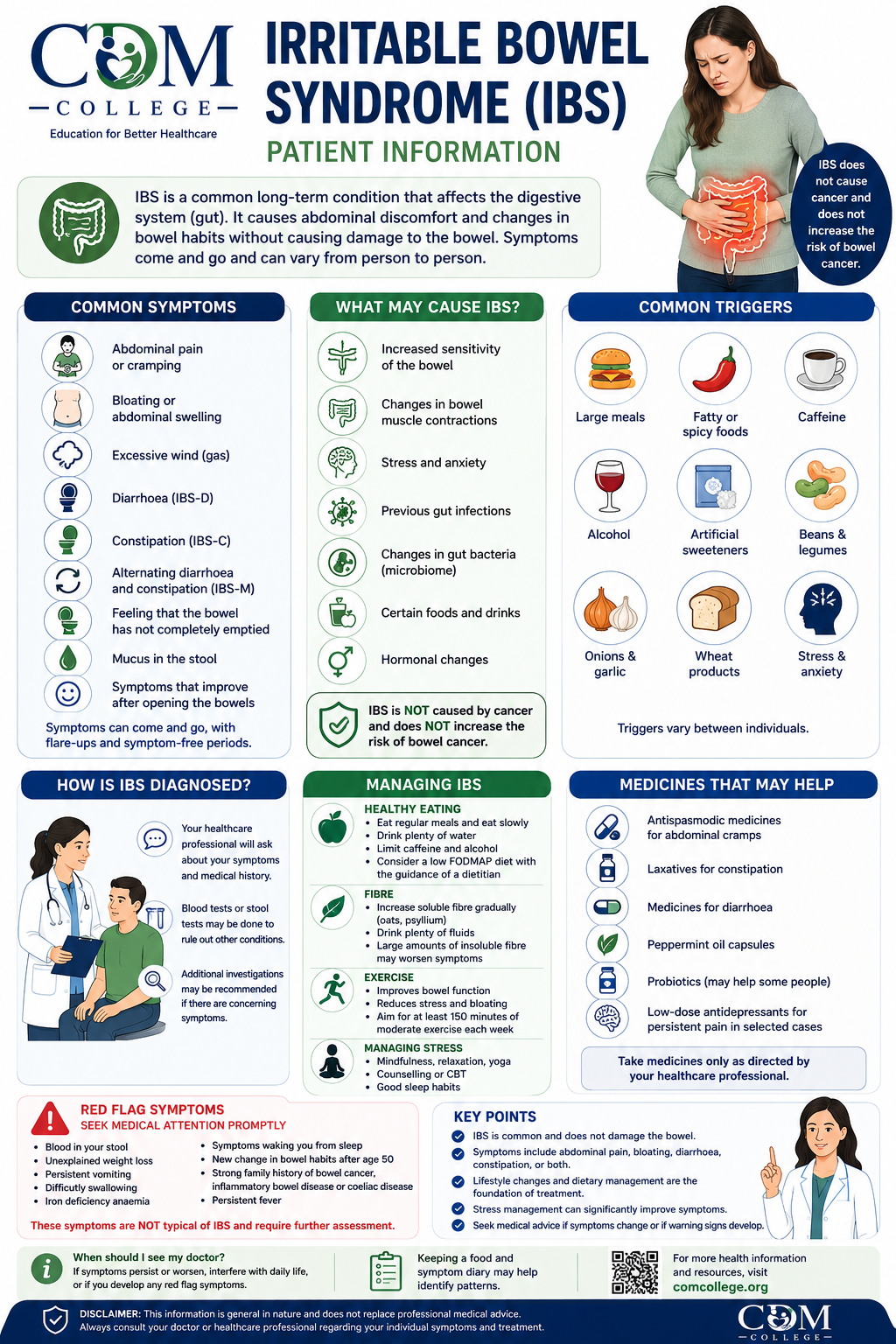
Irritable Bowel Syndrome (IBS) is a common condition that affects the digestive system (gut). It causes ongoing abdominal discomfort and changes in bowel habits without causing damage to the bowel itself.
IBS is considered a functional gastrointestinal disorder, meaning the bowel does not work as it should, even though it appears normal during medical tests.
IBS is a long-term condition, but symptoms often improve with lifestyle changes, dietary adjustments, and appropriate treatment.
Common Symptoms
Symptoms vary from person to person and may include:
- Abdominal pain or cramping
- Bloating or abdominal swelling
- Excessive wind (gas)
- Diarrhoea (IBS-D)
- Constipation (IBS-C)
- Alternating diarrhoea and constipation (IBS-M)
- Feeling that the bowel has not completely emptied
- Mucus in the stool
- Symptoms that improve after opening the bowels
Many people notice that symptoms come and go, with periods of flare-ups followed by symptom-free periods.
What Causes IBS?
The exact cause is not fully understood, but several factors may contribute:
- Increased sensitivity of the bowel
- Changes in bowel muscle contractions
- Stress and anxiety
- Previous gut infections
- Changes in gut bacteria (microbiome)
- Certain foods and drinks
- Hormonal changes
IBS is not caused by cancer and does not increase the risk of bowel cancer.
Common Triggers
Symptoms may worsen after:
- Large meals
- Fatty or spicy foods
- Caffeine
- Alcohol
- Artificial sweeteners
- Beans and legumes
- Onions and garlic
- Wheat products
- Stress or anxiety
- Lack of sleep
Triggers vary between individuals.
How is IBS Diagnosed?
Your healthcare professional will ask about your symptoms and medical history.
Sometimes blood tests or stool tests are performed to rule out other conditions.
Additional investigations may be recommended if there are concerning symptoms.
Red Flag Symptoms
Seek medical attention promptly if you experience:
- Blood in your stool
- Unexplained weight loss
- Persistent vomiting
- Difficulty swallowing
- Iron deficiency anaemia
- Symptoms waking you from sleep
- A new change in bowel habits after age 50
- A strong family history of bowel cancer, inflammatory bowel disease, or coeliac disease
- Persistent fever
These symptoms are not typical of IBS and require further assessment.
Managing IBS
Healthy Eating
Many people benefit from:
- Eating regular meals
- Eating slowly
- Avoiding overeating
- Drinking plenty of water
- Limiting caffeine and alcohol
- Reducing highly processed foods
A healthcare professional may recommend a low FODMAP diet, ideally under the guidance of an accredited practising dietitian.
Fibre
If constipation is a problem:
- Increase soluble fibre gradually (such as oats or psyllium)
- Drink plenty of fluids
Some people find that large amounts of insoluble fibre (such as wheat bran) can worsen symptoms.
Exercise
Regular physical activity may help:
- Improve bowel function
- Reduce stress
- Improve sleep
- Reduce bloating
Aim for at least 150 minutes of moderate exercise each week.
Managing Stress
Stress does not cause IBS but can make symptoms worse.
Helpful strategies include:
- Mindfulness
- Relaxation techniques
- Yoga
- Counselling
- Cognitive behavioural therapy (CBT)
- Good sleep habits
Medicines
Your doctor may recommend medication depending on your symptoms, including:
- Antispasmodic medicines for abdominal cramps
- Laxatives for constipation
- Medicines for diarrhoea
- Peppermint oil capsules
- Probiotics (which may help some people)
- Low-dose antidepressants for persistent pain in selected cases
Take medicines only as directed by your healthcare professional.
Living with IBS
IBS is a chronic condition, but most people can successfully manage symptoms by:
- Identifying personal food triggers
- Following a healthy diet
- Staying active
- Managing stress
- Taking prescribed medications when needed
- Attending regular medical reviews if symptoms change
Keeping a food and symptom diary may help identify patterns.
When Should I See My Doctor?
Arrange an appointment if:
- Symptoms persist or worsen
- You have frequent diarrhoea or constipation
- Your symptoms interfere with work or daily life
- You develop any red flag symptoms
- You are unsure whether your symptoms are due to IBS
Key Points
- IBS is common and does not damage the bowel.
- Symptoms include abdominal pain, bloating, diarrhoea, constipation, or both.
- Lifestyle changes and dietary management are the foundation of treatment.
- Stress management can significantly improve symptoms.
- Seek medical advice if symptoms change or if warning signs develop.
Disclaimer
This leaflet provides general health information and is not a substitute for professional medical advice. Always consult your doctor or healthcare professional regarding your individual symptoms and treatment.
Help Shape the Future of Healthcare
Your donation enables CDM College to educate healthcare professionals, develop evidence-based learning, support scholarships, and improve the quality of chronic disease care for communities worldwide.
❤️ Donate Securely
Help Shape the Future of Healthcare
Your donation enables CDM College to educate healthcare professionals, develop evidence-based learning, support scholarships, and improve the quality of chronic disease care for communities worldwide.
❤️ Donate Securely
Leave a Reply