
Understanding the Infection and Supporting Recovery
CDM College Health Education Series
Cellulitis is a bacterial infection of the deeper layers of the skin and the tissues underneath. It can occur anywhere on the body but is particularly common in the lower legs.
Cellulitis can become serious if it spreads, so early assessment and treatment are important.
What Is Cellulitis?
Cellulitis develops when bacteria enter through a break in the skin and spread into the surrounding tissues.
The entry point may be obvious, such as a cut or wound, but sometimes the break in the skin is so small that it is difficult to see.
Cellulitis is not usually spread from person to person through ordinary contact.
Common Symptoms
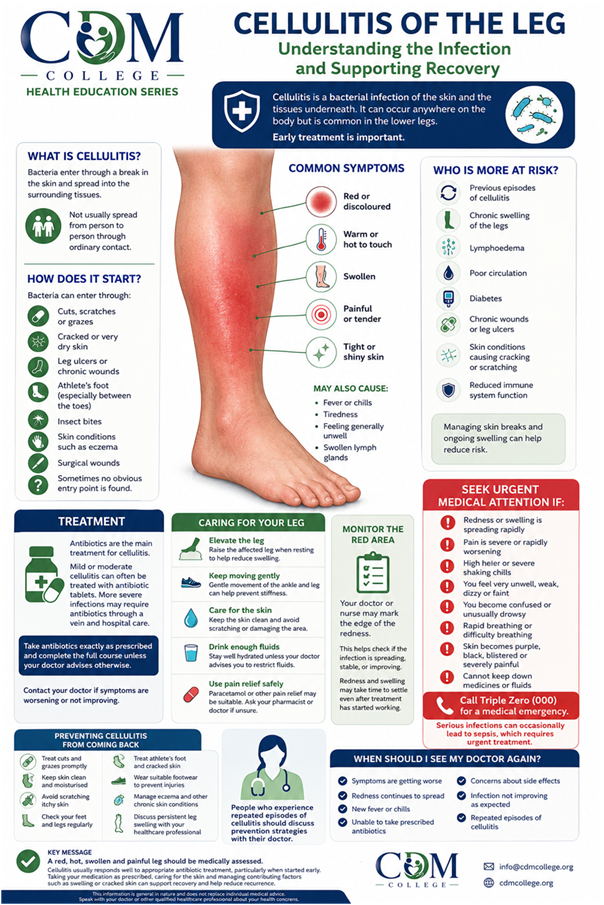
Cellulitis usually affects one area of the skin. The affected leg may become:
- Red or discoloured
- Hot or warm to touch
- Swollen
- Painful or tender
- Tight or shiny in appearance
The affected area may gradually increase in size.
Some people may also experience:
- Fever
- Chills or shivering
- Tiredness
- Feeling generally unwell
- Swollen lymph glands
Seek medical assessment promptly if you think you may have cellulitis.
How Does Cellulitis Start?
Bacteria can enter the skin through:
- Cuts, scratches or grazes
- Cracked or very dry skin
- Leg ulcers or other chronic wounds
- Athlete’s foot, especially between the toes
- Insect bites
- Surgical wounds
- Skin conditions such as eczema
- Areas of persistent leg swelling
Sometimes no obvious entry point can be found.
Who Is More at Risk?
The risk of cellulitis may be higher in people with:
- Previous episodes of cellulitis
- Chronic swelling of the legs
- Lymphoedema
- Poor circulation
- Diabetes
- Chronic wounds or leg ulcers
- Skin conditions that cause cracking or scratching
- Reduced immune system function
Treating skin breaks and managing ongoing swelling can help reduce the risk of future episodes.
How Is Cellulitis Treated?
Antibiotics
The main treatment for cellulitis is antibiotics.
Mild or moderate cellulitis can often be treated with antibiotic tablets. More severe infections may require antibiotics through a vein and hospital-based or supervised care.
Take antibiotics exactly as prescribed and complete the course unless your treating clinician advises otherwise.
Contact your doctor if your symptoms are worsening or are not improving as expected.
Caring for Your Leg During Recovery
Along with taking your prescribed medication:
Elevate the leg
Raise the affected leg when resting. This may help reduce swelling and discomfort.
Keep moving gently
Unless your doctor has advised otherwise, gentle movement of the ankle and leg can help prevent stiffness.
Care for the skin
Keep the skin clean and avoid scratching or damaging the affected area.
Drink enough fluids
Maintain adequate fluid intake unless your doctor has advised you to restrict fluids.
Use pain relief safely
Paracetamol or other pain relief may be appropriate for some people. Check with your doctor or pharmacist if you are uncertain which medicines are suitable for you.
Monitoring the Red Area
Your doctor or nurse may mark the edge of the redness with a pen.
This can help show whether the affected area is:
- Spreading
- Remaining stable
- Beginning to improve
Some redness and swelling may take time to fully settle even after the infection has started responding to treatment.
Seek Urgent Medical Attention If:
Seek urgent medical care if:
- The redness or swelling is spreading rapidly
- Pain is severe or rapidly worsening
- You have a high fever or severe shaking chills
- You feel very unwell, weak, dizzy or faint
- You become confused or unusually drowsy
- You develop rapid breathing or difficulty breathing
- The skin becomes purple, black, blistered or severely painful
- You cannot keep down your medicines or fluids
Call Triple Zero (000) for a medical emergency.
Serious infections can occasionally lead to sepsis, which requires urgent treatment.
Preventing Cellulitis From Coming Back
To help reduce future episodes:
- Treat cuts and grazes promptly
- Keep the skin clean and moisturised
- Avoid scratching itchy skin
- Check your feet and legs regularly
- Treat athlete’s foot and cracked skin
- Wear suitable footwear to prevent injuries
- Manage eczema and other chronic skin conditions
- Discuss persistent leg swelling with your healthcare professional
- Follow wound-care advice for ulcers or chronic wounds
People who experience repeated episodes of cellulitis should discuss prevention strategies with their doctor.
When Should I See My Doctor Again?
Arrange a medical review if:
- Your symptoms are getting worse
- The redness continues to spread
- You develop new fever or chills
- You are unable to take the prescribed antibiotics
- You have concerns about side effects
- The infection is not improving as expected
- You have repeated episodes of cellulitis
Early review can identify whether your treatment needs to be changed or whether further assessment is required.
Key Message
A red, hot, swollen and painful leg should be medically assessed.
Cellulitis usually responds well to appropriate antibiotic treatment, particularly when treatment is started early. Taking your medication as prescribed, caring for the skin and managing contributing factors such as swelling or cracked skin can support recovery and help reduce recurrence.
Help Shape the Future of Healthcare
Your donation enables CDM College to educate healthcare professionals, develop evidence-based learning, support scholarships, and improve the quality of chronic disease care for communities worldwide.
❤️ Donate SecurelyCDM College Health Education Series
Important Information
This patient information leaflet provides general educational information and does not replace individual medical assessment, diagnosis or treatment. Speak with your doctor or other qualified healthcare professional about concerns relating to your individual health or treatment.
Help Shape the Future of Healthcare
Your donation enables CDM College to educate healthcare professionals, develop evidence-based learning, support scholarships, and improve the quality of chronic disease care for communities worldwide.
❤️ Donate Securely
Leave a Reply