

CDM College Health Education Series
What is Sleep Apnoea?
Sleep apnoea is a condition where breathing repeatedly stops or becomes shallow during sleep.
The most common type is Obstructive Sleep Apnoea (OSA). This happens when the muscles and soft tissues in the throat relax and partly or fully block the airway during sleep.
These breathing pauses can reduce oxygen levels and repeatedly wake the brain from deep sleep, often without the person fully realising it.
Untreated OSA can increase the risk of health problems, including high blood pressure, heart rhythm problems, coronary heart disease, heart failure and stroke.
What is Hypertension?
Hypertension means high blood pressure.
Blood pressure is the force of blood pushing against the walls of the arteries. If it stays high over time, it can place extra strain on the heart, brain, kidneys and blood vessels.
Many people with high blood pressure do not feel any symptoms, which is why regular blood pressure checks are important.
How Are Sleep Apnoea and Hypertension Connected?
Sleep apnoea can contribute to high blood pressure because repeated breathing pauses cause:
- Drops in oxygen levels
- Interrupted sleep
- Activation of the stress nervous system
- Increased heart rate and blood pressure during the night
- Poor blood pressure control during the day
People with untreated moderate to severe OSA have a higher risk of high blood pressure and cardiovascular problems.
Sleep apnoea is especially important to consider if blood pressure is difficult to control despite treatment.
Common Symptoms of Sleep Apnoea
You may notice:
- Loud snoring
- Pauses in breathing during sleep, often noticed by a partner
- Gasping, choking or snorting during sleep
- Waking with a dry mouth
- Morning headaches
- Feeling unrefreshed after sleep
- Daytime tiredness or sleepiness
- Poor concentration
- Irritability or mood changes
- Reduced libido
- Needing to pass urine frequently overnight
Some people with sleep apnoea do not feel very sleepy, even when the condition is significant.
Symptoms of High Blood Pressure
High blood pressure often has no symptoms.
When very high, it may sometimes be associated with:
- Headaches
- Dizziness
- Blurred vision
- Chest discomfort
- Shortness of breath
- Nosebleeds
These symptoms can have many causes and should be assessed by a healthcare professional.
Who is More at Risk?
Risk factors for sleep apnoea include:
- Being overweight or obese
- Large neck circumference
- Ageing
- Male sex
- Family history of sleep apnoea
- Smoking
- Alcohol use, especially in the evening
- Sedative medicines
- Nasal blockage
- Certain jaw or airway anatomy
- Pregnancy
- Menopause
Risk factors for hypertension include:
- Family history
- Increasing age
- High salt intake
- Being overweight
- Physical inactivity
- Excess alcohol
- Smoking
- Diabetes
- Kidney disease
- Stress
- Sleep apnoea
When Should I Speak to My Doctor?
Arrange a GP review if you have:
- Loud snoring with tiredness
- Witnessed pauses in breathing during sleep
- Waking choking or gasping
- Morning headaches
- Daytime sleepiness
- High blood pressure
- Blood pressure that remains high despite medication
- Atrial fibrillation or other heart rhythm problems
- Previous stroke or heart disease
- Drowsiness while driving
How is Sleep Apnoea Diagnosed?
Your healthcare professional may ask about:
- Snoring
- Witnessed breathing pauses
- Daytime sleepiness
- Sleep quality
- Morning headaches
- Work or driving fatigue
- Alcohol or sedative use
- Weight and neck circumference
- Blood pressure and heart health
Diagnosis usually involves a sleep study, which may be performed at home or in a sleep laboratory. This measures breathing, oxygen levels, heart rate and sleep-related events.
How is Hypertension Diagnosed?
Blood pressure should usually be checked more than once.
Your doctor may recommend:
- Clinic blood pressure measurements
- Home blood pressure monitoring
- 24-hour ambulatory blood pressure monitoring
- Blood tests
- Urine tests
- ECG or heart assessment if needed
This helps confirm whether blood pressure is persistently high and whether there are other risk factors.
Treatment of Sleep Apnoea
Treatment depends on severity, symptoms and individual factors.
Lifestyle Measures
These may include:
- Weight reduction if overweight
- Regular exercise
- Avoiding alcohol close to bedtime
- Avoiding sedatives unless prescribed
- Sleeping on your side if apnoea is worse on your back
- Treating nasal congestion
- Stopping smoking
CPAP Therapy
CPAP stands for Continuous Positive Airway Pressure. It uses gentle air pressure through a mask to keep the airway open during sleep.
CPAP is a common treatment for obstructive sleep apnoea.
Mandibular Advancement Splint
Some people may benefit from a dental device that moves the lower jaw forward during sleep.
This is usually fitted by a trained dentist and may be suitable for mild to moderate OSA or selected patients who cannot tolerate CPAP.
Specialist Review
Referral to a sleep physician, ENT surgeon, respiratory physician or dentist may be recommended depending on the cause and severity.
Treatment of Hypertension
Managing high blood pressure may include:
- Reducing salt intake
- Regular physical activity
- Weight management
- Limiting alcohol
- Stopping smoking
- Healthy diet
- Managing stress
- Treating sleep apnoea if present
- Blood pressure medication if required
Do not stop blood pressure medication without medical advice.
Why Treatment Matters
Treating sleep apnoea can improve:
- Snoring
- Sleep quality
- Daytime alertness
- Morning headaches
- Concentration
- Quality of life
It may also help improve blood pressure control in some people, especially when sleep apnoea is significant and treatment is used consistently. Studies show CPAP can produce modest blood pressure reductions in patients with OSA.
Driving and Safety
Sleep apnoea can increase the risk of accidents due to daytime sleepiness and reduced alertness.
Do not drive if you feel sleepy, have near-misses, or have fallen asleep while driving.
Speak to your doctor if your work involves:
- Driving
- Heavy machinery
- Safety-critical duties
- Shift work
Self-Care Tips
✔ Check your blood pressure regularly if advised.
✔ Keep a sleep diary if symptoms are unclear.
✔ Avoid alcohol close to bedtime.
✔ Maintain a regular sleep schedule.
✔ Use CPAP or other treatment exactly as prescribed.
✔ Bring your CPAP machine data or app report to reviews if available.
✔ Aim for gradual, sustainable weight management if overweight.
✔ Tell your doctor about drowsy driving.
Seek Urgent Medical Care If You Develop
🚨 Chest pain or chest pressure
🚨 Severe shortness of breath
🚨 Fainting or collapse
🚨 New weakness of the face, arm or leg
🚨 New difficulty speaking
🚨 Sudden severe headache
🚨 Confusion
🚨 Very high blood pressure with symptoms such as chest pain, breathlessness, neurological symptoms or severe headache
Call 000 Immediately If
- You have chest pain lasting more than a few minutes.
- You have signs of stroke: face drooping, arm weakness or speech difficulty.
- You are severely short of breath.
- You collapse or lose consciousness.
- You have severe symptoms with very high blood pressure.
Key Points
- Sleep apnoea causes repeated breathing pauses during sleep.
- Untreated OSA can increase the risk of high blood pressure and cardiovascular disease.
- High blood pressure often has no symptoms.
- A sleep study can confirm sleep apnoea.
- Treatment may include lifestyle changes, CPAP, oral appliances or specialist care.
- Treating sleep apnoea may help improve daytime symptoms and blood pressure control.
- Seek urgent help for chest pain, stroke symptoms, severe breathlessness or collapse.
Help Shape the Future of Healthcare
Your donation enables CDM College to educate healthcare professionals, develop evidence-based learning, support scholarships, and improve the quality of chronic disease care for communities worldwide.
❤️ Donate SecurelyFrequently Asked Questions
Can sleep apnoea cause high blood pressure?
Sleep apnoea can contribute to high blood pressure, particularly when moderate or severe and untreated.
Will CPAP cure my blood pressure?
CPAP may help blood pressure control in some people, but many patients still need lifestyle measures and blood pressure medication.
Can I have sleep apnoea if I am not overweight?
Yes. Weight is a common risk factor, but airway anatomy, age, family history, nasal blockage and other factors can also contribute.
Is snoring always sleep apnoea?
No. Many people snore without sleep apnoea. However, loud snoring with choking, witnessed pauses or daytime tiredness should be assessed.
Disclaimer
This leaflet provides general health information only and is not a substitute for professional medical advice, diagnosis or treatment. Always consult your doctor or healthcare professional about your symptoms and treatment.
For chest pain, stroke symptoms, severe breathlessness, collapse or severe symptoms with very high blood pressure, call 000.
CDM College
Education for Better Healthcare
Help Shape the Future of Healthcare
Your donation enables CDM College to educate healthcare professionals, develop evidence-based learning, support scholarships, and improve the quality of chronic disease care for communities worldwide.
❤️ Donate Securely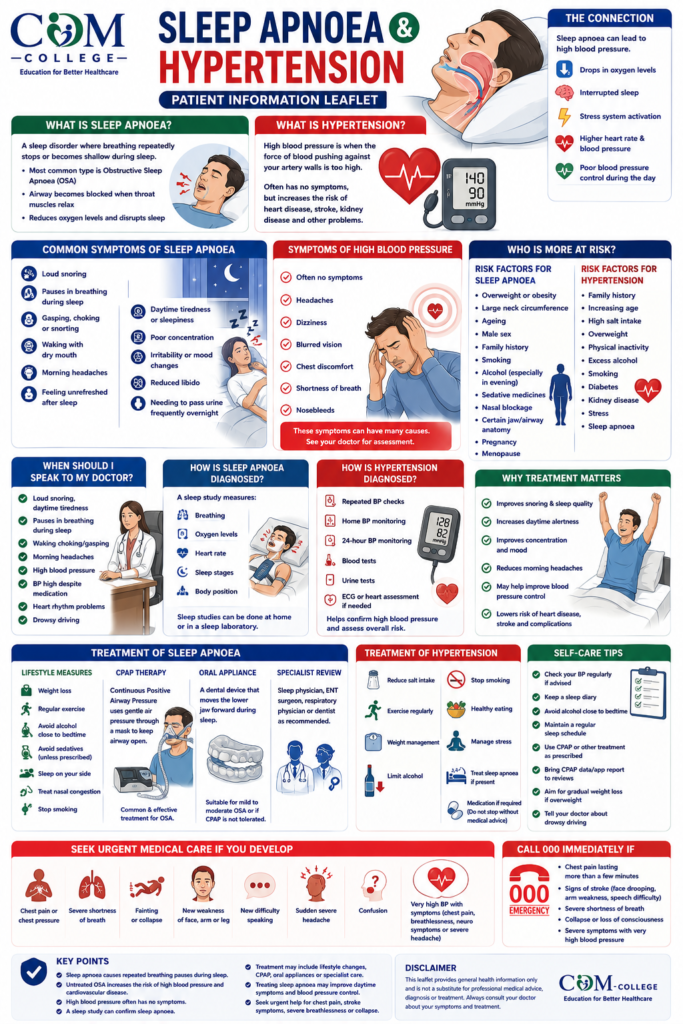
Help Shape the Future of Healthcare
Your donation enables CDM College to educate healthcare professionals, develop evidence-based learning, support scholarships, and improve the quality of chronic disease care for communities worldwide.
❤️ Donate Securely
Leave a Reply