
CDM College Health Education Series
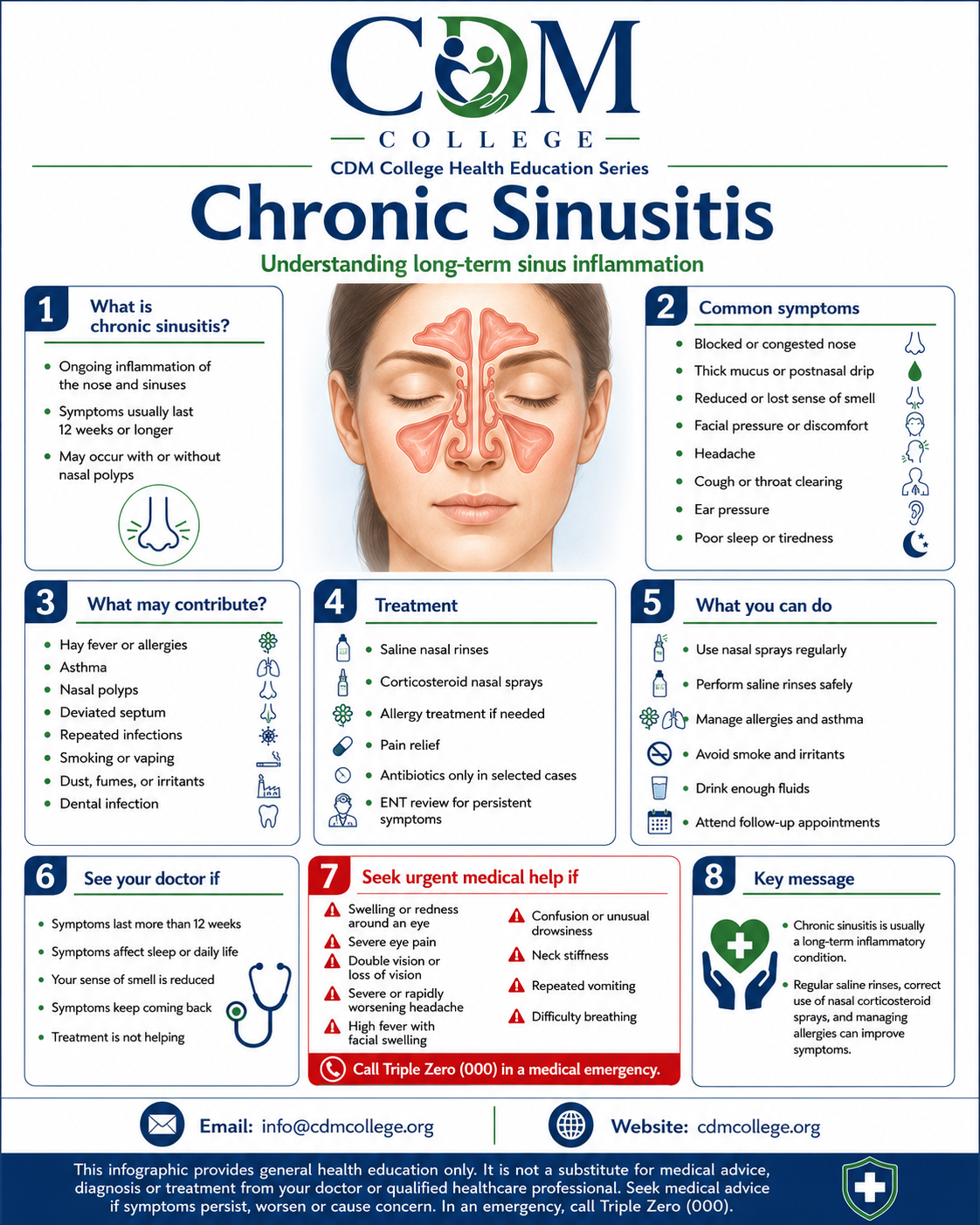
Chronic sinusitis, also called chronic rhinosinusitis, is ongoing inflammation of the nose and sinuses. Symptoms usually continue for 12 weeks or longer and may occur with or without nasal polyps. It is not always caused by a bacterial infection. (Mayo Clinic)
Common symptoms
You may experience:
- A blocked or congested nose
- Thick nasal mucus or postnasal drip
- Reduced or lost sense of smell
- Pressure or discomfort around the cheeks, forehead or eyes
- Cough or frequent throat clearing
- Headache
- Ear pressure
- Bad breath
- Poor sleep or tiredness
Symptoms can vary and may become worse during colds, allergy seasons or exposure to smoke and other irritants.
What may contribute to it?
Chronic sinusitis may be linked with:
- Hay fever or other allergies
- Asthma
- Nasal polyps
- A deviated nasal septum
- Repeated respiratory infections
- Smoking, vaping or second-hand smoke
- Dust, fumes or workplace irritants
- Dental infections
Sometimes more than one factor is involved.
How is it treated?
Saline nasal rinses
Salt-water rinses can remove mucus, allergens and irritants. Use a commercial saline product or water that is distilled, sterile, or previously boiled and cooled. Clean the rinsing device after use.
Corticosteroid nasal sprays
These sprays reduce inflammation and congestion. They usually work best when used regularly and correctly, rather than only when symptoms are severe. (RACGP)
Aim the spray slightly outward, away from the middle wall of the nose, and breathe in gently.
Other treatments
Depending on the cause, your doctor may recommend:
- Allergy treatment
- Pain relief
- A short course of another prescribed medicine
- Antibiotics when a bacterial infection is suspected
- Referral to an ear, nose and throat specialist
Antibiotics are not required for every case because chronic sinusitis is often mainly inflammatory. (Healthdirect)
Avoid using decongestant nasal sprays for more than a few days unless advised by your doctor, as prolonged use may make congestion worse. (Healthdirect)
What you can do
- Use prescribed sprays consistently.
- Perform saline rinses safely.
- Manage hay fever and asthma.
- Avoid smoking, vaping and known irritants.
- Drink enough fluids.
- Attend follow-up appointments.
- Ask your doctor or pharmacist to check your nasal-spray technique.
See your doctor if
Arrange a medical review if:
- Symptoms last longer than 12 weeks
- Symptoms affect your sleep or daily activities
- Your sense of smell is significantly reduced
- You experience repeated flare-ups
- Symptoms mainly affect one side
- You have frequent nosebleeds
- Treatment is not helping
Your doctor may examine your nose and consider allergy testing, imaging or referral to an ENT specialist.
Seek urgent medical help if you develop
- Swelling or redness around an eye
- Severe eye pain
- Double vision or loss of vision
- Severe or rapidly worsening headache
- High fever with facial swelling
- Confusion or unusual drowsiness
- Neck stiffness
- Repeated vomiting
- Difficulty breathing
Call Triple Zero (000) immediately in a medical emergency.
Key message
Chronic sinusitis is usually a long-term inflammatory condition. Regular saline rinses, correct use of nasal corticosteroid sprays and management of allergies or other contributing conditions can improve symptoms.
CDM College Health Education Series
Email: info@cdmcollege.org
Website: cdmcollege.org
Disclaimer
This leaflet provides general health education only. It is not a substitute for individual medical advice, diagnosis or treatment from your doctor or another qualified healthcare professional.
Seek medical advice if your symptoms persist, worsen or cause concern.
In an emergency, call Triple Zero (000).
Help Shape the Future of Healthcare
Your donation enables CDM College to educate healthcare professionals, develop evidence-based learning, support scholarships, and improve the quality of chronic disease care for communities worldwide.
❤️ Donate Securely
Leave a Reply