
By CDM College
Heart disease remains one of the leading causes of illness and death worldwide. Fortunately, medications known as statins have significantly reduced the risk of heart attacks and strokes for millions of people. Despite their widespread use, many patients have questions about how statins work, their safety, and whether they are the right treatment.
This article explains everything you need to know about statins in a clear and evidence-based way.
What Are Statins?
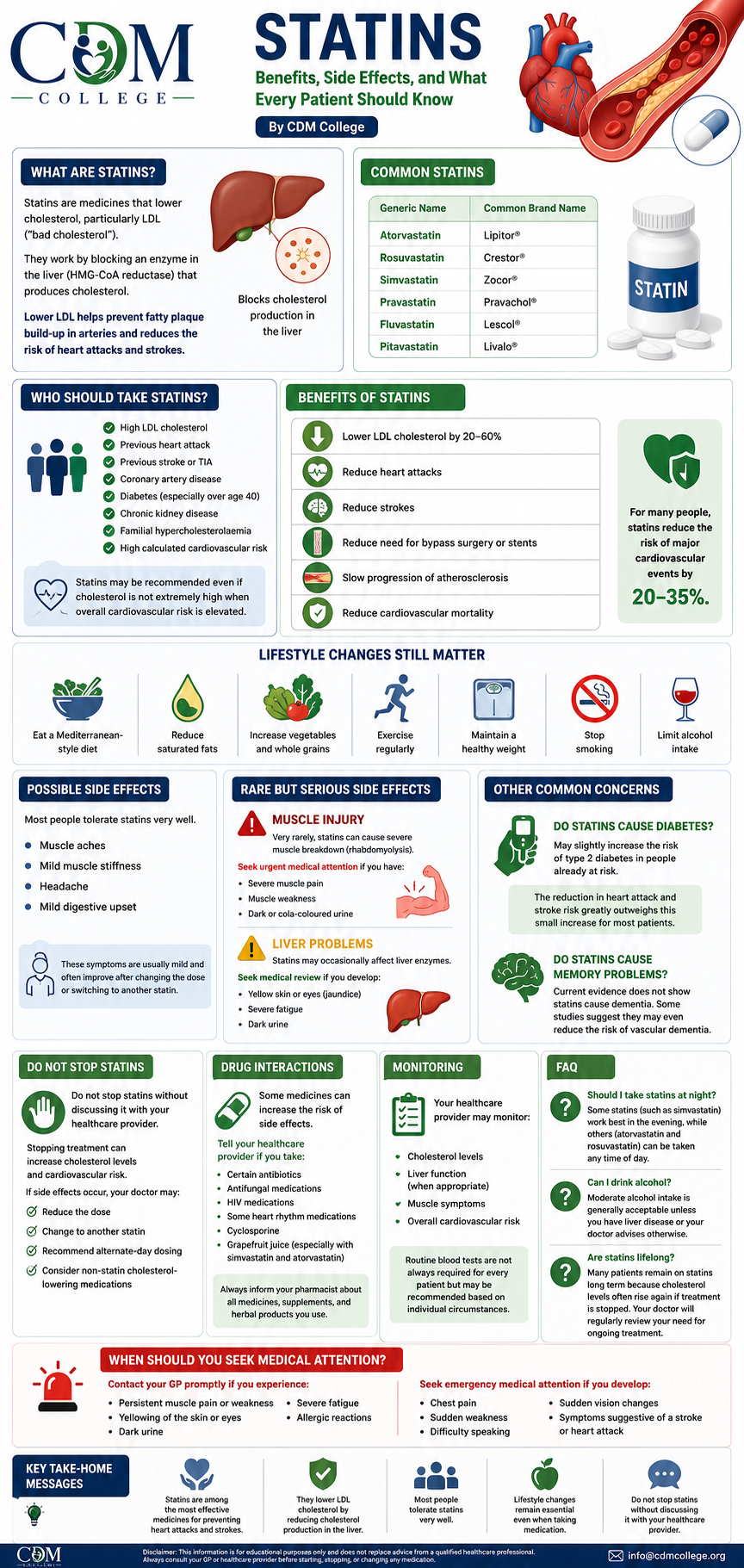
Statins are a group of medicines that lower cholesterol levels in the blood, particularly low-density lipoprotein (LDL) cholesterol, often called the “bad cholesterol.”
They work by blocking an enzyme in the liver called HMG-CoA reductase, which is responsible for producing cholesterol.
Lower LDL cholesterol helps prevent fatty plaque from building up inside arteries, reducing the risk of cardiovascular disease.
Common Statins
Some commonly prescribed statins include:
| Generic Name | Common Brand Name |
| Atorvastatin | Lipitor® |
| Rosuvastatin | Crestor® |
| Simvastatin | Zocor® |
| Pravastatin | Pravachol® |
| Fluvastatin | Lescol® |
| Pitavastatin | Livalo® |
Who Should Take Statins?
Your healthcare provider may recommend statins if you have:
✔ High LDL cholesterol
✔ Previous heart attack
✔ Previous stroke or transient ischaemic attack (TIA)
✔ Coronary artery disease
✔ Diabetes (particularly over age 40)
✔ Chronic kidney disease
✔ Familial hypercholesterolaemia
✔ High calculated cardiovascular risk
Statins may be prescribed even if cholesterol is not extremely high, particularly when the overall cardiovascular risk is elevated.
Benefits of Statins
Large clinical trials involving hundreds of thousands of patients have shown statins:
✅ Lower LDL cholesterol by 20–60%
✅ Reduce heart attacks
✅ Reduce strokes
✅ Reduce need for bypass surgery or stents
✅ Slow progression of atherosclerosis
✅ Reduce cardiovascular mortality
For many people, statins reduce the risk of major cardiovascular events by 20–35%.
Lifestyle Changes Still Matter
Statins work best alongside healthy lifestyle choices:
• Eat a Mediterranean-style diet
• Reduce saturated fats
• Increase vegetables and whole grains
• Exercise regularly
• Maintain a healthy weight
• Stop smoking
• Limit alcohol intake
Possible Side Effects
Most people tolerate statins very well.
Common side effects may include:
• Muscle aches
• Mild muscle stiffness
• Headache
• Mild digestive upset
These symptoms are usually mild and often improve after changing the dose or switching to another statin.
Rare but Serious Side Effects
Although uncommon, serious complications can occur.
Muscle Injury
Very rarely, statins can cause severe muscle breakdown (rhabdomyolysis), particularly when combined with certain medications.
Seek urgent medical attention if you experience:
• Severe muscle pain
• Muscle weakness
• Dark or cola-coloured urine
Liver Problems
Statins may occasionally affect liver enzymes.
Your doctor may order blood tests if clinically indicated.
Seek medical review if you develop:
• Yellow skin or eyes (jaundice)
• Severe fatigue
• Dark urine
Do Statins Cause Diabetes?
Research shows statins may slightly increase the risk of developing type 2 diabetes in people already at risk.
However:
The reduction in heart attack and stroke risk greatly outweighs this small increase for most patients.
Do Statins Cause Memory Problems?
Some patients report temporary memory concerns.
Current evidence has not demonstrated that statins cause dementia, and some studies suggest they may even reduce the risk of vascular dementia.
Can You Stop Taking Statins?
Do not stop statins without discussing it with your healthcare provider.
Stopping treatment can increase cholesterol levels and cardiovascular risk.
If side effects occur, your doctor may:
• Reduce the dose
• Change to another statin
• Recommend alternate-day dosing
• Consider non-statin cholesterol-lowering medications
Drug Interactions
Some medicines can increase the risk of side effects.
Tell your healthcare provider if you take:
• Certain antibiotics
• Antifungal medications
• HIV medications
• Some heart rhythm medications
• Cyclosporine
• Grapefruit juice (especially with simvastatin and atorvastatin)
Always inform your pharmacist about all prescription medicines, supplements, and herbal products you use.
Monitoring
Your healthcare provider may monitor:
• Cholesterol levels
• Liver function (when appropriate)
• Muscle symptoms
• Overall cardiovascular risk
Routine blood tests are not always required for every patient but may be recommended based on individual circumstances.
Frequently Asked Questions
Should I take statins at night?
Some statins (such as simvastatin) work best when taken in the evening, while others (atorvastatin and rosuvastatin) can be taken at any time of day.
Can I drink alcohol?
Moderate alcohol intake is generally acceptable unless you have liver disease or your healthcare provider advises otherwise.
Are statins lifelong?
Many patients remain on statins long term because cholesterol levels often rise again if treatment is stopped. Your healthcare provider will regularly review whether ongoing treatment remains appropriate.
When Should You Seek Medical Attention?
Contact your GP promptly if you experience:
• Persistent muscle pain or weakness
• Yellowing of the skin or eyes
• Dark urine
• Severe fatigue
• Allergic reactions
Seek emergency medical attention if you develop:
• Chest pain
• Sudden weakness
• Difficulty speaking
• Sudden vision changes
• Symptoms suggestive of a stroke or heart attack
Key Take-Home Messages
✅ Statins are among the most effective medicines for preventing heart attacks and strokes.
✅ They lower LDL (“bad”) cholesterol by reducing cholesterol production in the liver.
✅ Most people tolerate statins very well.
✅ Lifestyle changes remain essential even when taking medication.
✅ Do not stop statins without discussing it with your healthcare provider.
Help Shape the Future of Healthcare
Your donation enables CDM College to educate healthcare professionals, develop evidence-based learning, support scholarships, and improve the quality of chronic disease care for communities worldwide.
❤️ Donate SecurelyDisclaimer
This article is intended for educational purposes only and does not replace professional medical advice. Always consult your GP or healthcare provider before starting, stopping, or changing any medication. If you experience symptoms of a heart attack, stroke, severe allergic reaction, or significant muscle weakness, seek emergency medical care immediately.
Help Shape the Future of Healthcare
Your donation enables CDM College to educate healthcare professionals, develop evidence-based learning, support scholarships, and improve the quality of chronic disease care for communities worldwide.
❤️ Donate SecurelyReferences
- Australian Heart Foundation. Australian Guideline for Assessing and Managing Cardiovascular Disease Risk.
- National Vascular Disease Prevention Alliance. Guidelines for the Management of Absolute Cardiovascular Disease Risk.
- National Institute for Health and Care Excellence (NICE). Cardiovascular Disease: Risk Assessment and Reduction, Including Lipid Modification (NG238).
- American College of Cardiology/American Heart Association (ACC/AHA). Guideline on the Management of Blood Cholesterol.
- European Society of Cardiology (ESC). Guidelines for the Management of Dyslipidaemias.
Leave a Reply