

CDM College Health Education Series
Perimenopause is the natural transition leading up to menopause. During this time, hormone levels fluctuate, particularly oestrogen and progesterone, resulting in a wide range of physical and emotional symptoms.
Perimenopause is a normal stage of life—not a disease—and effective treatments and lifestyle strategies are available to help manage symptoms.
What is Perimenopause?
Perimenopause is the period before menopause when the ovaries gradually produce less oestrogen.
It usually begins between 40 and 50 years of age, although some women experience symptoms earlier.
Perimenopause ends when a woman has gone 12 consecutive months without a menstrual period, marking menopause.
The transition may last 2–8 years, although the duration varies between individuals.
Common Symptoms
Symptoms vary widely and may include:
Menstrual Changes
- Irregular periods
- Heavier or lighter bleeding
- Shorter or longer cycles
- Missed periods
Vasomotor Symptoms
- Hot flushes
- Night sweats
- Feeling suddenly overheated
Sleep Problems
- Difficulty falling asleep
- Frequent waking
- Poor-quality sleep
Mood Changes
- Irritability
- Anxiety
- Low mood
- Mood swings
Cognitive Symptoms
- Poor concentration
- Forgetfulness
- “Brain fog”
Physical Symptoms
- Fatigue
- Headaches
- Joint or muscle aches
- Weight gain (especially around the abdomen)
- Breast tenderness
Genitourinary Symptoms
- Vaginal dryness
- Pain during intercourse
- Reduced libido
- Increased urinary frequency
- Recurrent urinary tract infections
Why Does It Happen?
During perimenopause:
- Oestrogen levels fluctuate significantly.
- Ovulation becomes less predictable.
- Progesterone production declines.
- Hormonal changes affect many organs, including the brain, bones, heart, skin, and urinary tract.
Lifestyle Measures That Can Help
Simple lifestyle changes can improve symptoms:
✔ Regular physical activity
✔ Strength training
✔ Healthy Mediterranean-style diet
✔ Adequate calcium and vitamin D
✔ Maintain a healthy weight
✔ Good sleep hygiene
✔ Reduce alcohol intake
✔ Stop smoking
✔ Stress management and relaxation techniques
Treatment Options
Treatment depends on the severity of symptoms and individual preferences.
Hormone Therapy (Menopausal Hormone Therapy – MHT)
MHT is the most effective treatment for:
- Hot flushes
- Night sweats
- Sleep disturbance
- Vaginal symptoms
Your doctor will discuss whether MHT is appropriate based on your medical history.
Non-Hormonal Treatments
For women who cannot or prefer not to use hormones:
- Cognitive behavioural therapy (CBT)
- Selective antidepressants (SSRIs/SNRIs) for hot flushes in selected patients
- Gabapentin (selected patients)
- Vaginal moisturisers and lubricants
- Vaginal oestrogen for genitourinary symptoms (when appropriate)
Looking After Bone Health
Falling oestrogen increases the risk of osteoporosis.
Protect your bones by:
- Weight-bearing exercise
- Adequate calcium intake
- Vitamin D
- Avoid smoking
- Limiting alcohol
- Bone density testing when indicated
Looking After Heart Health
After menopause, cardiovascular risk gradually increases.
Maintain heart health by:
- Regular exercise
- Healthy diet
- Blood pressure checks
- Cholesterol monitoring
- Diabetes screening
- Maintaining a healthy weight
When Should You See Your GP?
Arrange a medical review if you experience:
- Symptoms affecting your quality of life
- Heavy or prolonged bleeding
- Bleeding after sex
- Bleeding after menopause
- Symptoms before age 40
- Severe mood changes
- Persistent pelvic pain
Myths About Perimenopause
Myth: Pregnancy is impossible during perimenopause.
Fact: Pregnancy is still possible until menopause is confirmed. Contraception may still be required.
Myth: Every woman experiences severe hot flushes.
Fact: Symptoms vary greatly. Some women experience only mild symptoms.
Key Take-Home Messages
✔ Perimenopause is a normal life transition.
✔ Symptoms are caused by changing hormone levels.
✔ Effective treatments are available.
✔ Healthy lifestyle changes can significantly improve wellbeing.
✔ Speak to your GP if symptoms affect your daily life.
Help Shape the Future of Healthcare
Your donation enables CDM College to educate healthcare professionals, develop evidence-based learning, support scholarships, and improve the quality of chronic disease care for communities worldwide.
❤️ Donate SecurelyDisclaimer
This information is intended for educational purposes only and should not replace medical advice from your healthcare professional. Symptoms of perimenopause may overlap with other medical conditions. Always consult your GP or qualified healthcare provider for an individual assessment, diagnosis, and discussion of the most appropriate treatment options. Seek urgent medical attention if you experience severe bleeding, chest pain, sudden weakness, or other emergency symptoms.
References
- Australasian Menopause Society (AMS). Information Sheets and Clinical Practice Resources. https://www.menopause.org.au
- Royal Australian College of General Practitioners (RACGP). Management of Perimenopause and Menopause in General Practice.
- National Institute for Health and Care Excellence (NICE). Menopause: Diagnosis and Management (NG23). Updated 2024.
- North American Menopause Society (NAMS). The 2023 Nonhormone Therapy Position Statement.
- International Menopause Society (IMS). Global Consensus Recommendations on Menopausal Hormone Therapy.
Help Shape the Future of Healthcare
Your donation enables CDM College to educate healthcare professionals, develop evidence-based learning, support scholarships, and improve the quality of chronic disease care for communities worldwide.
❤️ Donate Securely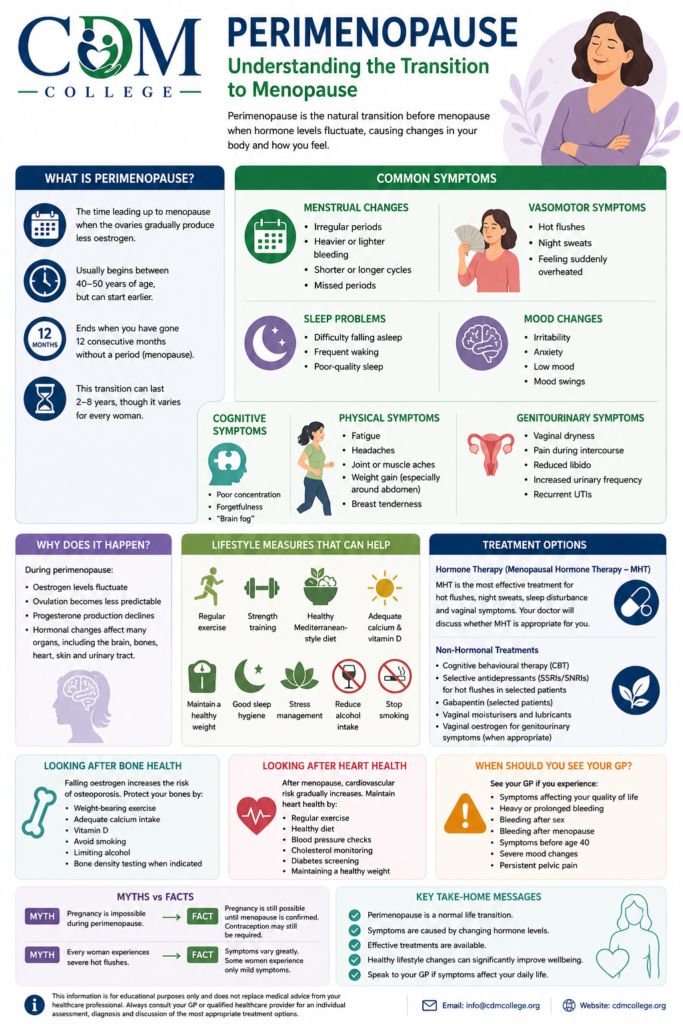
Help Shape the Future of Healthcare
Your donation enables CDM College to educate healthcare professionals, develop evidence-based learning, support scholarships, and improve the quality of chronic disease care for communities worldwide.
❤️ Donate Securely
Leave a Reply