

CDM College Health Education Series
Menopause is a natural stage of life that marks the end of a woman’s reproductive years. It is diagnosed after 12 consecutive months without a menstrual period, provided there is no other medical cause.
Although menopause is a normal life transition, hormonal changes can cause a variety of symptoms that may affect daily life. The good news is that effective treatments and lifestyle strategies are available.
What is Menopause?
Menopause occurs when the ovaries stop releasing eggs and produce much lower levels of the hormones oestrogen and progesterone.
The average age of menopause in Australia is around 51 years, although it can occur earlier or later.
Types of Menopause
- Natural menopause – occurs as part of the normal ageing process.
- Early menopause – occurs between 40 and 45 years.
- Premature menopause (Primary Ovarian Insufficiency) – occurs before 40 years.
- Surgical menopause – follows removal of both ovaries.
Common Symptoms
Not every woman experiences menopause in the same way.
Hot Flushes
- Sudden feeling of heat
- Flushing of the face and neck
- Sweating
- Lasting seconds to several minutes
Night Sweats
- Excessive sweating during sleep
- Disturbed sleep
- Fatigue
Sleep Problems
- Difficulty falling asleep
- Frequent waking
- Poor-quality sleep
Mood Changes
- Irritability
- Anxiety
- Low mood
- Mood swings
Brain Fog
- Poor concentration
- Forgetfulness
- Difficulty focusing
Genitourinary Symptoms
- Vaginal dryness
- Pain during intercourse
- Reduced libido
- Urinary urgency or frequency
- Recurrent urinary tract infections
Other Symptoms
- Joint and muscle aches
- Headaches
- Dry skin
- Weight gain, particularly around the abdomen
- Fatigue
Long-Term Health Effects
Reduced oestrogen levels can increase the risk of:
Osteoporosis
- Bone thinning
- Increased fracture risk
Heart Disease
- Higher cholesterol
- Increased cardiovascular risk
Maintaining a healthy lifestyle can help reduce these risks.
Lifestyle Tips
Simple lifestyle changes can make a significant difference.
✅ Regular exercise
✅ Strength and resistance training
✅ Healthy Mediterranean-style diet
✅ Maintain a healthy weight
✅ Good sleep habits
✅ Stop smoking
✅ Limit alcohol
✅ Adequate calcium and vitamin D
✅ Stress management and relaxation techniques
Treatment Options
Treatment depends on your symptoms, health history, and personal preferences.
Menopausal Hormone Therapy (MHT)
MHT is the most effective treatment for:
- Hot flushes
- Night sweats
- Sleep disturbance
- Vaginal symptoms
Your GP will discuss whether MHT is suitable for you based on your individual health profile.
Non-Hormonal Treatments
Some women prefer or require non-hormonal options.
These may include:
- Cognitive behavioural therapy (CBT)
- Certain antidepressants (SSRIs or SNRIs)
- Gabapentin (selected patients)
- Vaginal moisturisers
- Water-based lubricants
- Vaginal oestrogen (when appropriate)
Looking After Bone Health
Protect your bones by:
- Weight-bearing exercise
- Strength training
- Adequate calcium intake
- Vitamin D
- Avoiding smoking
- Limiting alcohol
- Bone density testing if recommended
Looking After Heart Health
Maintain cardiovascular health by:
- Regular exercise
- Healthy eating
- Monitoring blood pressure
- Cholesterol checks
- Diabetes screening
- Maintaining a healthy weight
When Should You See Your GP?
Arrange an appointment if you experience:
- Symptoms affecting your quality of life
- Menopause before age 45
- Vaginal bleeding after menopause
- Heavy or prolonged bleeding
- Severe mood changes
- Persistent pelvic pain
- Concerns about treatment options
Seek urgent medical attention if you develop chest pain, sudden weakness, severe headache, or heavy bleeding.
Myths vs Facts
Myth
Menopause means life becomes unhealthy.
Fact: Most women remain healthy and active with appropriate lifestyle measures and, when indicated, effective treatment.
Myth
Hormone therapy is unsafe for everyone.
Fact: For many healthy women under 60 years or within 10 years of menopause, MHT is considered safe and effective after an individual assessment by their doctor.
Myth
Pregnancy is possible after menopause.
Fact: Once menopause has been confirmed (12 months without periods), natural pregnancy is no longer possible.
Key Take-Home Messages
✔ Menopause is a natural stage of life.
✔ Symptoms vary from woman to woman.
✔ Effective treatments are available.
✔ Healthy lifestyle habits improve wellbeing and long-term health.
✔ Speak to your GP if symptoms affect your daily life.
Help Shape the Future of Healthcare
Your donation enables CDM College to educate healthcare professionals, develop evidence-based learning, support scholarships, and improve the quality of chronic disease care for communities worldwide.
❤️ Donate SecurelyDisclaimer
This information is intended for general educational purposes only and should not replace advice from a qualified healthcare professional. Menopausal symptoms may overlap with other medical conditions. Always consult your GP or healthcare provider for an individual assessment, diagnosis, and discussion of the most appropriate treatment options. Seek urgent medical attention if you experience heavy postmenopausal bleeding, chest pain, stroke symptoms, or other medical emergencies.
References
- Australasian Menopause Society (AMS). Information Sheets and Clinical Practice Resources. https://www.menopause.org.au
- Royal Australian College of General Practitioners (RACGP). Management of Perimenopause and Menopause in General Practice.
- National Institute for Health and Care Excellence (NICE). Menopause: Diagnosis and Management (NG23). Updated 2024.
- The Menopause Society (formerly North American Menopause Society). 2023 Nonhormone Therapy Position Statement.
- International Menopause Society (IMS). Global Consensus Recommendations on Menopausal Hormone Therapy.
Help Shape the Future of Healthcare
Your donation enables CDM College to educate healthcare professionals, develop evidence-based learning, support scholarships, and improve the quality of chronic disease care for communities worldwide.
❤️ Donate Securely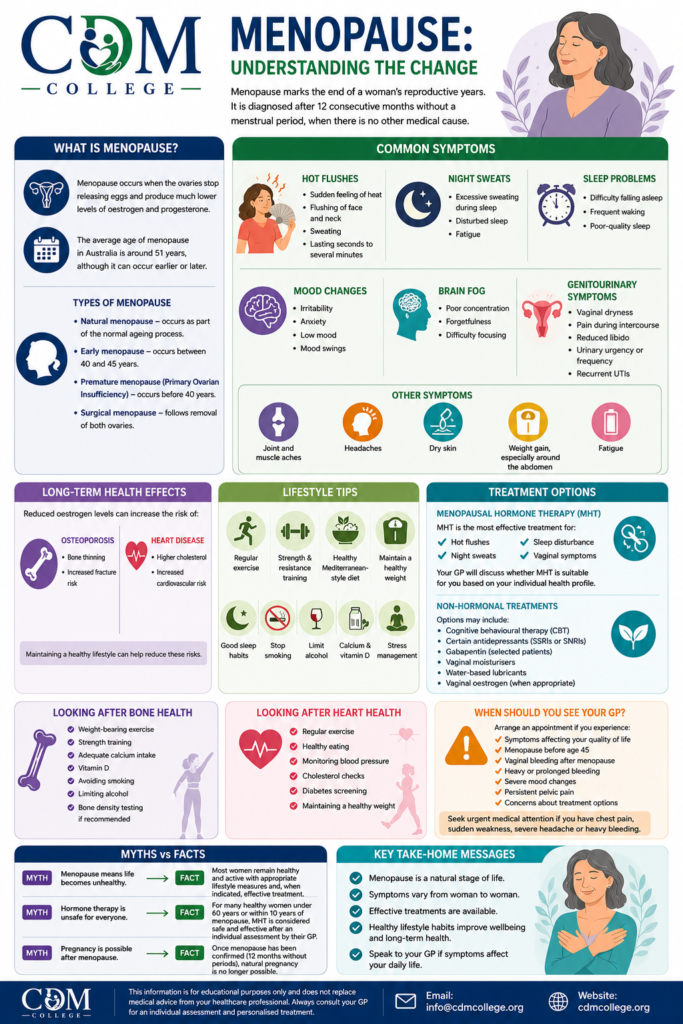
Help Shape the Future of Healthcare
Your donation enables CDM College to educate healthcare professionals, develop evidence-based learning, support scholarships, and improve the quality of chronic disease care for communities worldwide.
❤️ Donate Securely
Leave a Reply