
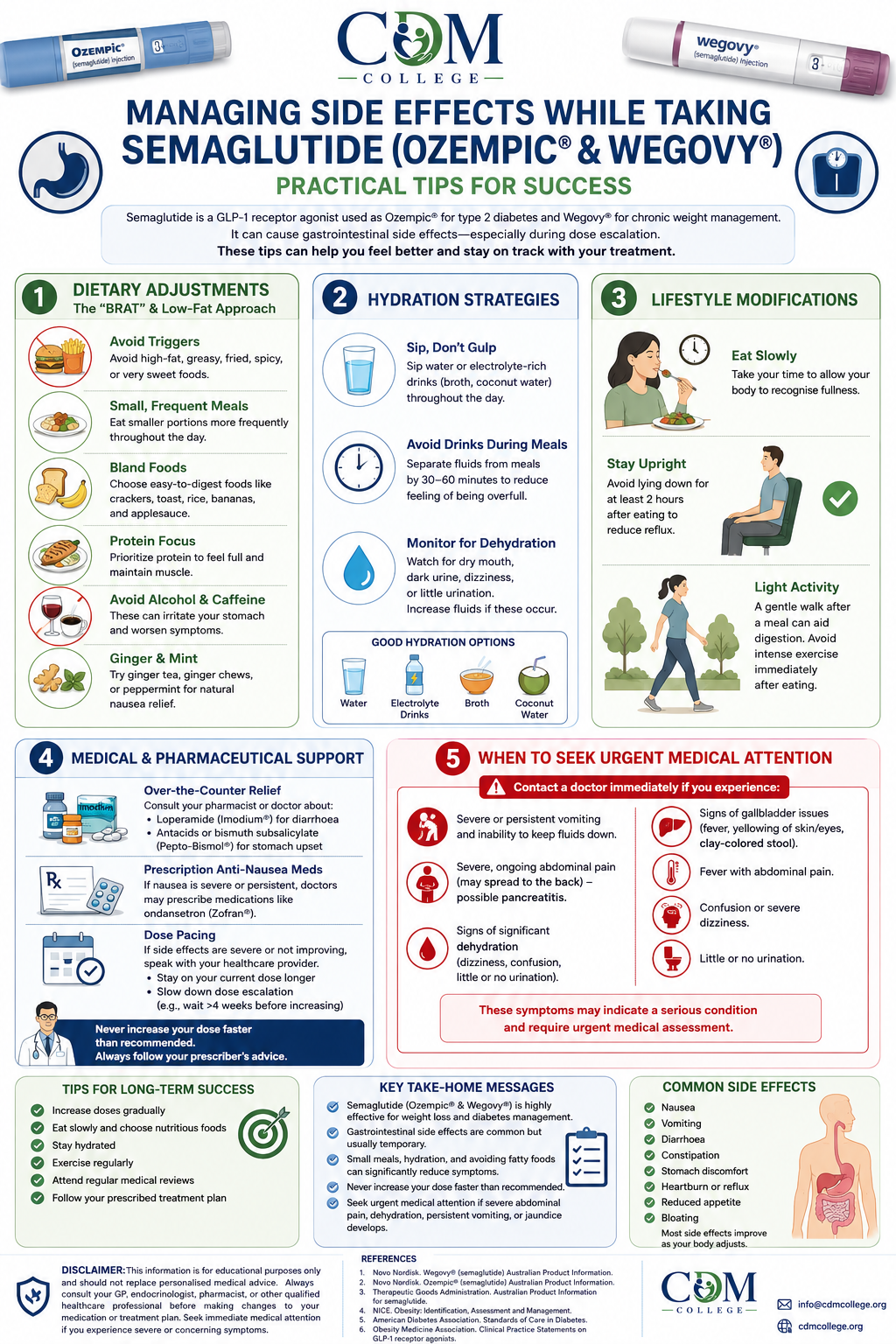
Managing Side Effects While Taking Semaglutide (Ozempic® & Wegovy®): Practical Tips for Success
By CDM College
Semaglutide has transformed the management of obesity and type 2 diabetes, helping millions achieve significant weight loss while improving metabolic health. Marketed as Ozempic® for type 2 diabetes and Wegovy® for chronic weight management, semaglutide belongs to a class of medicines known as GLP-1 receptor agonists.
While highly effective, many people experience gastrointestinal side effects, particularly during the first few weeks of treatment or after increasing the dose. Fortunately, these symptoms are usually temporary and can often be managed with simple dietary and lifestyle adjustments.
What Is Semaglutide?
Semaglutide mimics a naturally occurring hormone called glucagon-like peptide-1 (GLP-1), which helps regulate:
- Appetite
- Blood sugar levels
- Stomach emptying
- Feelings of fullness
By slowing gastric emptying and reducing hunger, semaglutide helps people eat less and lose weight over time.
Common Side Effects
Most side effects occur during dose escalation and gradually improve.
The most frequently reported include:
- Nausea
- Vomiting
- Diarrhoea
- Constipation
- Stomach discomfort
- Heartburn or reflux
- Reduced appetite
- Bloating
1. Dietary Adjustments
Making a few simple dietary changes can dramatically reduce nausea and stomach upset.
Choose Bland Foods
If you’re feeling nauseated, opt for easy-to-digest foods such as:
- Toast
- Plain crackers
- Rice
- Bananas
- Applesauce
These foods are gentle on the stomach and commonly recommended during episodes of gastrointestinal upset.
Avoid Trigger Foods
Foods that commonly worsen symptoms include:
- Fried foods
- Fatty meals
- Greasy takeaway foods
- Spicy meals
- Sugary desserts
- Rich creamy sauces
Reducing these foods often leads to significant improvement.
Eat Smaller Meals
Instead of three large meals:
- Eat 5–6 small meals throughout the day
- Stop eating when comfortably full
- Avoid overeating
Large meals stretch the stomach and may worsen nausea.
Prioritise Protein
Protein helps preserve muscle while promoting satiety.
Good options include:
- Eggs
- Greek yoghurt
- Chicken
- Fish
- Lean meat
- Cottage cheese
- Protein shakes (if tolerated)
Avoid Alcohol and Excess Caffeine
Both alcohol and large amounts of caffeine may irritate the stomach and worsen:
- Nausea
- Reflux
- Dehydration
Try Ginger or Peppermint
Natural remedies that many people find helpful include:
- Ginger tea
- Ginger chews
- Fresh ginger
- Peppermint tea
2. Stay Well Hydrated
Vomiting or diarrhoea can quickly lead to dehydration.
Sip Rather Than Gulp
Instead of drinking a large glass all at once:
- Take frequent small sips
- Drink steadily throughout the day
Good hydration options include:
- Water
- Oral rehydration solution
- Clear broth
- Coconut water
Separate Drinks From Meals
Some people find symptoms improve by:
- Drinking fluids 30–60 minutes before or after meals
- Avoiding large drinks during meals
Watch for Dehydration
Seek medical advice if you notice:
- Dark urine
- Dry mouth
- Dizziness
- Fatigue
- Reduced urination
3. Lifestyle Strategies
Small behavioural changes often make a significant difference.
Eat Slowly
Take your time.
Your brain needs time to recognise fullness, especially while taking semaglutide.
Stay Upright After Eating
Avoid lying flat for at least 2 hours after meals.
This helps reduce:
- Reflux
- Heartburn
- Nausea
Gentle Activity
A short walk after meals may assist digestion.
Avoid vigorous exercise immediately after eating if you feel nauseated.
4. Medical Support
If symptoms persist, speak with your healthcare provider.
Over-the-Counter Options
Your pharmacist or doctor may recommend:
- Loperamide (Imodium®) for diarrhoea
- Bismuth subsalicylate (Pepto-Bismol®) for stomach upset
- Antacids for reflux symptoms
Always follow package directions and seek medical advice if symptoms continue.
Prescription Medicines
Persistent nausea may require prescription treatment such as:
- Ondansetron (Zofran®)
Only use prescription medicines under medical supervision.
Dose Escalation
Semaglutide doses are intentionally increased slowly.
If side effects remain troublesome:
- Stay on your current dose longer
- Delay dose escalation
- Discuss a personalised schedule with your prescriber
Never increase your dose earlier than advised.
When Should You Seek Urgent Medical Attention?
Although uncommon, serious complications can occur.
Seek urgent medical care immediately if you experience:
- Persistent vomiting and inability to keep fluids down
- Severe abdominal pain, especially if spreading to the back (possible pancreatitis)
- Fever with abdominal pain
- Yellowing of the skin or eyes (jaundice)
- Clay-coloured stools
- Confusion
- Severe dizziness
- Little or no urination
- Symptoms of severe dehydration
These symptoms require prompt medical assessment.
Tips for Long-Term Success
Many people find symptoms improve after the first few weeks.
Successful patients often:
- Increase doses gradually
- Eat slowly
- Stay hydrated
- Choose nutritious meals
- Exercise regularly
- Attend regular medical reviews
- Follow their prescribed treatment plan
Key Take-Home Messages
✅ Semaglutide (Ozempic® and Wegovy®) is highly effective for weight loss and diabetes management.
✅ Gastrointestinal side effects are common but usually temporary.
✅ Small meals, hydration, and avoiding fatty foods can significantly reduce symptoms.
✅ Never increase your dose faster than recommended.
✅ Seek urgent medical attention if severe abdominal pain, dehydration, persistent vomiting, or jaundice develops.
Help Shape the Future of Healthcare
Your donation enables CDM College to educate healthcare professionals, develop evidence-based learning, support scholarships, and improve the quality of chronic disease care for communities worldwide.
❤️ Donate SecurelyDisclaimer
This article is intended for educational purposes only and should not replace personalised medical advice. Always consult your GP, endocrinologist, pharmacist, or other qualified healthcare professional before making changes to your medication or treatment plan. Seek immediate medical attention if you experience severe or concerning symptoms.
References
- Novo Nordisk. Wegovy® (semaglutide) Australian Product Information.
- Novo Nordisk. Ozempic® (semaglutide) Australian Product Information.
- Therapeutic Goods Administration. Australian Product Information for semaglutide.
- National Institute for Health and Care Excellence. Obesity: Identification, Assessment and Management.
- American Diabetes Association. Standards of Care in Diabetes.
- Obesity Medicine Association. Clinical Practice Statements on GLP-1 receptor agonists.
Help Shape the Future of Healthcare
Your donation enables CDM College to educate healthcare professionals, develop evidence-based learning, support scholarships, and improve the quality of chronic disease care for communities worldwide.
❤️ Donate Securely
Leave a Reply