
CDM College Health Education Series
Disclaimer: This article is intended for educational purposes only. It does not recommend ivermectin as a treatment for cancer. Decisions about cancer treatment should always be made in consultation with a qualified oncologist or healthcare professional.
Introduction
In recent years, ivermectin has attracted considerable public attention as a possible treatment for various cancers. Much of this interest has come from laboratory research, internet discussions, social media, and anecdotal reports from patients rather than from large, high-quality clinical trials.
Some people report improvement while taking ivermectin, either alone or alongside conventional cancer treatments. However, anecdotal reports cannot establish whether ivermectin caused the improvement, whether other treatments were responsible, or whether the outcome was due to the natural course of the disease.
This article provides a balanced overview of what is currently known.
What is Ivermectin?
Ivermectin is a prescription antiparasitic medicine that has been used safely for decades to treat parasitic infections in humans, including:
- Scabies
- Strongyloidiasis
- Onchocerciasis (river blindness)
- Head lice (topical formulations)
It is included on the World Health Organization (WHO) Model List of Essential Medicines for approved parasitic indications.
Why Has Ivermectin Been Studied for Cancer?
Researchers became interested in ivermectin after laboratory studies suggested it may influence several biological pathways involved in cancer growth.
Experimental studies have reported that ivermectin may:
- Affect signalling pathways involved in tumour growth
- Promote programmed cell death (apoptosis)
- Reduce proliferation of certain cancer cells
- Influence the tumour microenvironment
- Potentially enhance the effects of some chemotherapy drugs in laboratory models
These findings have been observed primarily in cell cultures (in vitro) and animal studies, which are important for generating research hypotheses but do not demonstrate effectiveness in people.
What Does the Clinical Evidence Show?
At present, there is no high-quality evidence showing that ivermectin is an effective treatment for cancer in humans.
While some early-stage clinical studies and case reports have been published, there are currently:
- No large randomised controlled trials demonstrating improved survival with ivermectin.
- No major oncology guidelines recommending ivermectin as a standard cancer treatment.
- No regulatory approval for ivermectin as a cancer therapy.
Most oncologists therefore consider ivermectin an experimental treatment in the context of cancer.
Understanding Anecdotal Evidence
Many stories shared online describe people who believe ivermectin helped control or shrink their cancer.
These stories are known as anecdotal evidence.
Anecdotal reports can be valuable because they sometimes generate ideas for future scientific research. Historically, observations made by individual clinicians or patients have occasionally led to important medical discoveries.
However, anecdotal reports have important limitations:
- They do not include comparison groups.
- Other treatments may have been responsible for the improvement.
- Some cancers naturally grow slowly or fluctuate.
- Publication and reporting bias can influence which stories become widely known.
- It is often impossible to verify diagnoses, treatments, or outcomes.
For these reasons, anecdotal evidence alone cannot establish that a treatment is effective.
What Doses Have Been Reported Anecdotally?
There is no established or evidence-based ivermectin dose for cancer treatment.
Across online forums, case reports, and anecdotal discussions, a wide range of dosing schedules has been described. Some individuals report taking intermittent doses (for example, weekly or several times per week), while others describe daily use. The amounts reported vary considerably.
Because these regimens have not been validated in large clinical trials, there is no recognised safe or effective cancer dosing schedule.
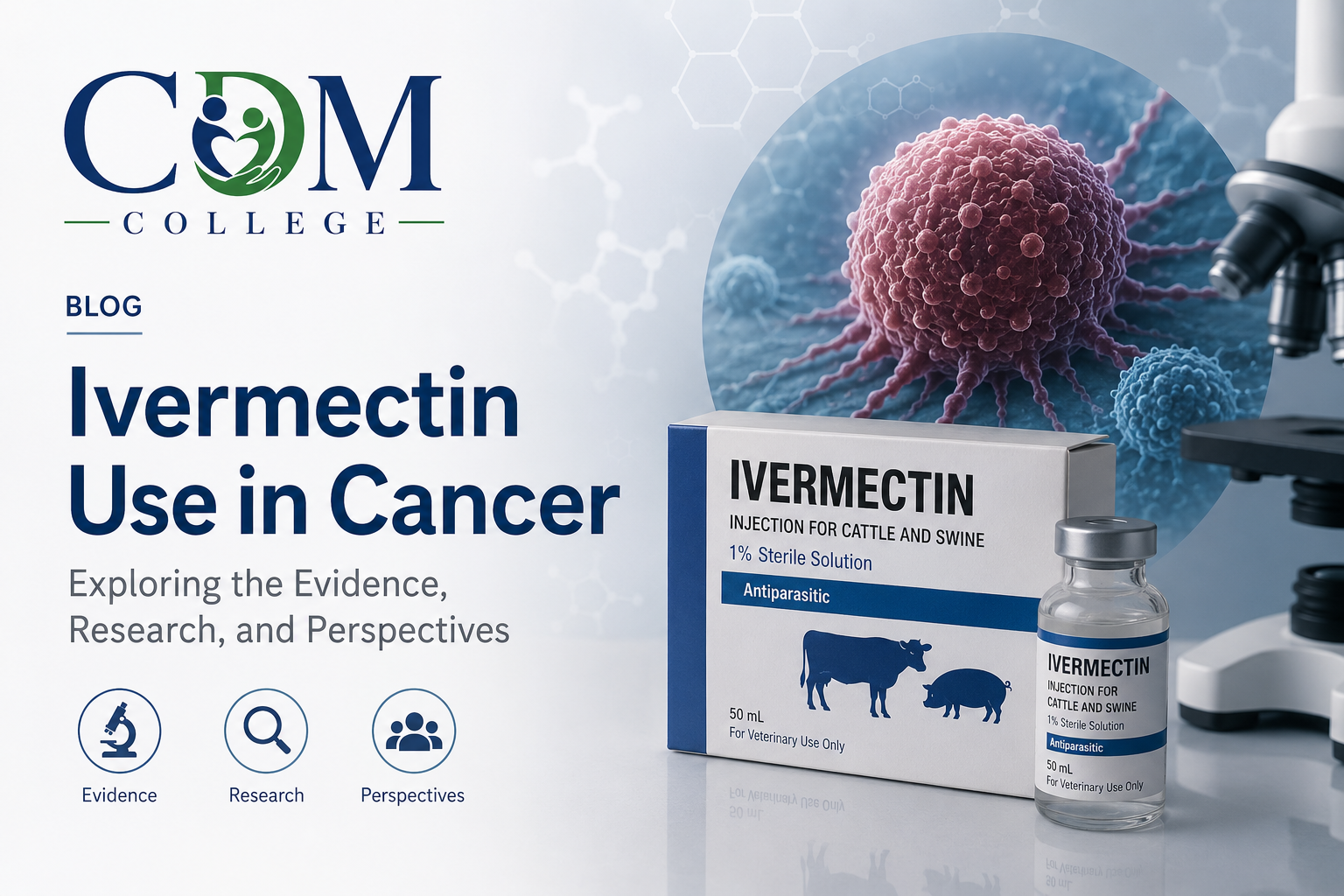
Some anecdotal reports also mention the use of veterinary (animal) ivermectin products. These products are manufactured and approved for animals, not humans, and may differ in concentration, inactive ingredients, and quality standards.
Is It Safe?
When prescribed for approved human indications, ivermectin is generally well tolerated.
Possible side effects include:
- Nausea
- Diarrhoea
- Dizziness
- Headache
- Skin rash
- Fatigue
Less common but potentially serious adverse effects may include:
- Confusion
- Difficulty walking
- Seizures
- Liver injury
- Allergic reactions
The risk of adverse effects may increase with higher or prolonged doses, especially those not supported by evidence.
Ivermectin may also interact with other medicines, including some anticoagulants, anticonvulsants, and medications that affect liver metabolism.
Should Conventional Cancer Treatment Be Delayed?
No.
There is currently no evidence that ivermectin should replace or delay proven cancer treatments such as:
- Surgery
- Chemotherapy
- Radiotherapy
- Immunotherapy
- Targeted therapies
- Hormone therapy (where appropriate)
Delaying evidence-based treatment may reduce the likelihood of successful cancer control.
Why Are More Studies Needed?
Although current evidence is insufficient to recommend ivermectin for cancer treatment, laboratory research and anecdotal reports have generated scientific interest.
Well-designed clinical trials are needed to determine:
- Whether ivermectin has meaningful anti-cancer effects in humans.
- Which cancer types, if any, might respond.
- Appropriate dosing and treatment duration.
- Safety when combined with conventional cancer therapies.
- Long-term outcomes.
Only carefully conducted human studies can answer these questions reliably.
If You Are Considering Ivermectin
If you are thinking about taking ivermectin alongside cancer treatment:
- Discuss it openly with your oncologist or treating doctor.
- Do not stop prescribed cancer treatment without medical advice.
- Be cautious about information from social media or non-scientific websites.
- Report any supplements or medicines you are taking to your healthcare team to reduce the risk of drug interactions.
Help Shape the Future of Healthcare
Your donation enables CDM College to educate healthcare professionals, develop evidence-based learning, support scholarships, and improve the quality of chronic disease care for communities worldwide.
❤️ Donate SecurelyKey Take-Home Messages
- Ivermectin is an established antiparasitic medicine, but it is not an approved treatment for cancer.
- Laboratory studies suggest possible anti-cancer mechanisms, but these findings have not yet been confirmed in large human clinical trials.
- Anecdotal reports may generate research hypotheses but cannot establish effectiveness or safety.
- Some people report using a variety of dosing schedules, including veterinary products, but there is no evidence-based or approved dosing regimen for cancer.
- More high-quality clinical research is needed to determine whether ivermectin has a role in cancer treatment.
- Patients should continue evidence-based cancer care and discuss any complementary therapies with their healthcare team.
References
- World Health Organization. WHO Model List of Essential Medicines. https://www.who.int/publications/i/item/WHO-MHP-HPS-EML-2023.02
- Australian Medicines Handbook. Ivermectin Monograph. Australian Medicines Handbook Pty Ltd.
- Juarez M, Schcolnik-Cabrera A, Dueñas-González A. The Multitargeted Drug Ivermectin: From an Antiparasitic Agent to a Potential Anticancer Drug. American Journal of Cancer Research. 2018;8(2):317–331.
- Meléndez A, et al. Ivermectin in Cancer Treatment: A Systematic Review of Preclinical Evidence. Cancers. 2024.
- National Cancer Institute (USA). Cancer Treatment Research and Clinical Trials. https://www.cancer.gov
- European Medicines Agency. Ivermectin: Approved Uses and Safety Information. https://www.ema.europa.eu
- U.S. Food and Drug Administration (FDA). Ivermectin Information. https://www.fda.gov
Disclaimer: This article is for educational purposes only and should not be interpreted as medical advice or an endorsement of ivermectin for cancer treatment. If you have cancer, discuss all treatment options—including complementary or experimental therapies—with your oncologist or healthcare provider.
Help Shape the Future of Healthcare
Your donation enables CDM College to educate healthcare professionals, develop evidence-based learning, support scholarships, and improve the quality of chronic disease care for communities worldwide.
❤️ Donate Securely
Leave a Reply