
CDM College Health Education Series
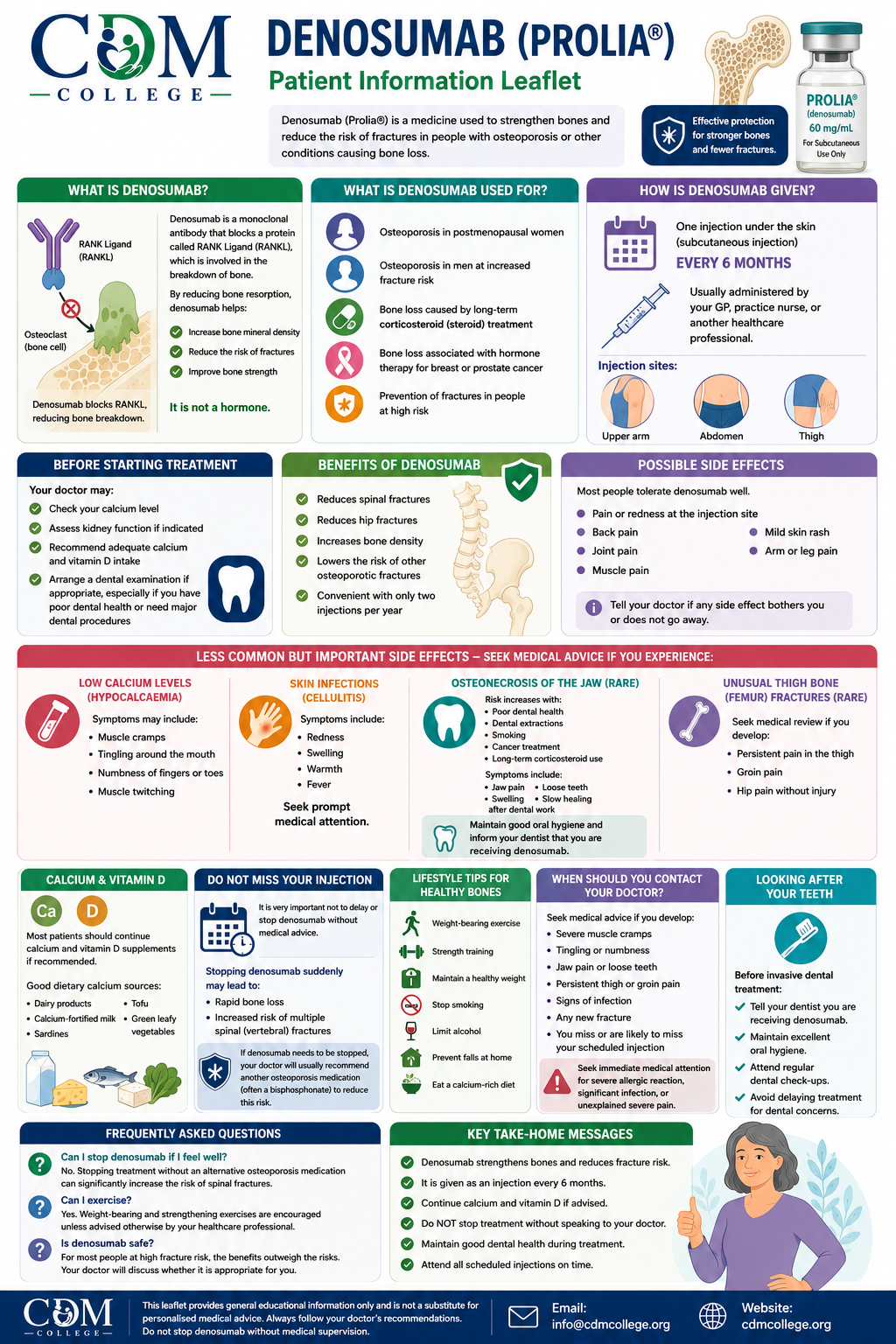
Denosumab (Prolia®) is a medication used to strengthen bones and reduce the risk of fractures in people with osteoporosis or other conditions causing bone loss. It works by slowing the breakdown of bone, helping to maintain or increase bone strength.
When taken as prescribed, denosumab is an effective treatment for reducing fractures of the spine, hip, and other bones.
What is Denosumab?
Denosumab is a monoclonal antibody that blocks a protein called RANK Ligand (RANKL), which is involved in the breakdown of bone.
By reducing bone resorption, denosumab helps:
- Increase bone mineral density
- Reduce the risk of fractures
- Improve bone strength
It is not a hormone.
What is Denosumab Used For?
Your doctor may prescribe denosumab for:
- Osteoporosis in postmenopausal women
- Osteoporosis in men at increased fracture risk
- Bone loss caused by long-term corticosteroid (steroid) treatment
- Bone loss associated with hormone therapy for breast or prostate cancer
- Prevention of fractures in people at high risk
How is Denosumab Given?
Denosumab is given as:
- One injection under the skin (subcutaneous injection)
- Every 6 months
- Usually administered by your GP, practice nurse, or another healthcare professional
The injection is commonly given into:
- Upper arm
- Abdomen
- Thigh
Before Starting Treatment
Your doctor may:
- Check your calcium level
- Assess kidney function if indicated
- Recommend adequate calcium and vitamin D intake
- Arrange a dental examination if appropriate, particularly if you have poor dental health or require major dental procedures
Benefits of Denosumab
Clinical studies have shown that denosumab can:
✔ Reduce spinal fractures
✔ Reduce hip fractures
✔ Increase bone density
✔ Lower the risk of other osteoporotic fractures
✔ Be convenient with only two injections per year
Possible Side Effects
Most people tolerate denosumab well.
Common side effects include:
- Pain or redness at the injection site
- Back pain
- Joint pain
- Muscle pain
- Mild skin rash
- Arm or leg pain
Less Common but Important Side Effects
Seek medical advice if you experience:
Low Calcium Levels (Hypocalcaemia)
Symptoms may include:
- Muscle cramps
- Tingling around the mouth
- Numbness of fingers or toes
- Muscle twitching
Skin Infections (Cellulitis)
Symptoms include:
- Redness
- Swelling
- Warmth
- Fever
Seek prompt medical attention.
Osteonecrosis of the Jaw (Rare)
Risk increases with:
- Poor dental health
- Dental extractions
- Smoking
- Cancer treatment
- Long-term corticosteroid use
Symptoms include:
- Jaw pain
- Loose teeth
- Swelling
- Slow healing after dental work
Maintain good oral hygiene and inform your dentist that you are receiving denosumab.
Unusual Thigh Bone (Femur) Fractures (Rare)
Seek medical review if you develop:
- Persistent pain in the thigh
- Groin pain
- Hip pain without injury
Calcium and Vitamin D
Most patients should continue:
- Calcium supplements (if recommended)
- Vitamin D supplements
Good dietary calcium sources include:
- Dairy products
- Calcium-fortified milk
- Sardines
- Tofu
- Green leafy vegetables
Do Not Miss Your Injection
It is very important not to delay or stop denosumab without medical advice.
Stopping denosumab suddenly may lead to:
- Rapid bone loss
- Increased risk of multiple spinal (vertebral) fractures
If denosumab needs to be stopped, your doctor will usually recommend another osteoporosis medication (often a bisphosphonate) to reduce this risk.
Lifestyle Tips for Healthy Bones
Alongside treatment:
✅ Weight-bearing exercise
✅ Strength training
✅ Maintain a healthy weight
✅ Stop smoking
✅ Limit alcohol
✅ Prevent falls at home
✅ Eat a calcium-rich diet
When Should You Contact Your Doctor?
Seek medical advice if you develop:
- Severe muscle cramps
- Tingling or numbness
- Jaw pain
- Loose teeth
- Persistent thigh or groin pain
- Signs of infection
- Any new fracture
- You miss or are likely to miss your scheduled injection
Looking After Your Teeth
Before invasive dental treatment:
- Tell your dentist you are receiving denosumab.
- Maintain excellent oral hygiene.
- Attend regular dental check-ups.
- Avoid delaying treatment for dental concerns.
Frequently Asked Questions
Can I stop denosumab if I feel well?
No. Stopping treatment without an alternative osteoporosis medication can significantly increase the risk of spinal fractures.
Can I exercise?
Yes. Weight-bearing and strengthening exercises are encouraged unless advised otherwise by your healthcare professional.
Is denosumab safe?
For most people at high fracture risk, the benefits outweigh the risks. Your doctor will discuss whether it is appropriate for you.
Key Take-Home Messages
✔ Denosumab strengthens bones and reduces fracture risk.
✔ It is given as an injection every 6 months.
✔ Continue calcium and vitamin D if advised.
✔ Do not stop treatment without speaking to your doctor.
✔ Maintain good dental health during treatment.
✔ Attend all scheduled injections on time.
Help Shape the Future of Healthcare
Your donation enables CDM College to educate healthcare professionals, develop evidence-based learning, support scholarships, and improve the quality of chronic disease care for communities worldwide.
❤️ Donate SecurelyDisclaimer
This leaflet provides general educational information only and is not a substitute for personalised medical advice. Always follow your doctor’s recommendations regarding denosumab treatment. Do not stop denosumab without medical supervision, as doing so may increase the risk of serious spinal fractures. Seek immediate medical attention if you develop symptoms of severe allergic reaction, significant infection, severe muscle cramps, persistent jaw pain, or unexplained thigh or groin pain.
References
- Therapeutic Guidelines Australia. Osteoporosis. Latest edition.
- Royal Australian College of General Practitioners (RACGP). Osteoporosis Prevention, Diagnosis and Management in General Practice.
- Healthy Bones Australia. Osteoporosis Clinical Guidelines. 2023.
- Royal Osteoporosis Society (UK). Denosumab (Prolia®) Patient Information.
- National Institute for Health and Care Excellence (NICE). Denosumab for the Prevention of Osteoporotic Fractures in Postmenopausal Women.
- Prolia® (denosumab) Australian Product Information.
Help Shape the Future of Healthcare
Your donation enables CDM College to educate healthcare professionals, develop evidence-based learning, support scholarships, and improve the quality of chronic disease care for communities worldwide.
❤️ Donate Securely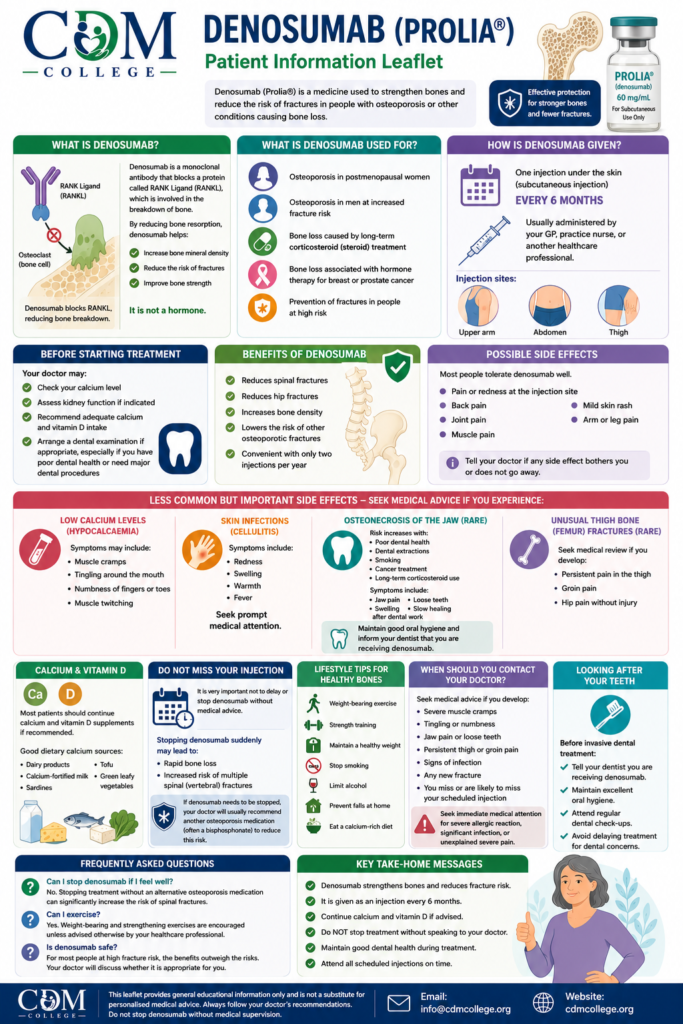
Help Shape the Future of Healthcare
Your donation enables CDM College to educate healthcare professionals, develop evidence-based learning, support scholarships, and improve the quality of chronic disease care for communities worldwide.
❤️ Donate Securely
Leave a Reply