

CDM College Health Education Series
What is Cervical Degenerative Disc Disease?
Cervical Degenerative Disc Disease (DDD) is a common condition where the discs between the bones (vertebrae) in the neck gradually wear down over time. These discs act as cushions and shock absorbers, allowing your neck to move smoothly.
As we age, the discs naturally lose water content and elasticity, making them thinner and less flexible. This can lead to neck pain, stiffness, or irritation of nearby nerves.
Despite its name, Degenerative Disc Disease is not actually a disease but an age-related change. Many people have disc degeneration without experiencing any symptoms.
Common Symptoms
You may experience:
- Neck pain or aching
- Neck stiffness
- Pain that worsens after prolonged sitting or looking down
- Pain when turning your head
- Muscle tightness or spasms
- Headaches that begin at the base of the skull (cervicogenic headaches)
- Pain radiating into the shoulder or upper back
- Pain travelling down one or both arms (cervical radiculopathy)
- Numbness or tingling in the arms or hands
- Weakness in the arm or hand
- Reduced neck movement
Symptoms often fluctuate, with periods of flare-ups followed by improvement.
What Causes Cervical Degenerative Disc Disease?
Several factors may contribute, including:
- Ageing
- Previous neck injuries (including whiplash)
- Repetitive neck movements
- Poor posture
- Prolonged computer or mobile phone use
- Smoking
- Heavy manual work
- Genetics
- Sedentary lifestyle
How is it Diagnosed?
Your healthcare professional may:
- Ask about your symptoms
- Examine your neck
- Assess neck movement
- Check muscle strength
- Test sensation and reflexes
- Assess balance and walking if needed
Imaging may include:
- X-ray
- MRI (best for discs and nerves)
- CT scan (selected cases)
Many people have degenerative changes on MRI without pain.
Treatment
Most people improve without surgery.
Stay Active
Keeping your neck moving within comfortable limits helps recovery.
Avoid prolonged bed rest or wearing a cervical collar unless specifically advised.
Physiotherapy
A physiotherapist may recommend:
- Gentle neck mobility exercises
- Postural correction
- Deep neck muscle strengthening
- Shoulder blade strengthening
- Stretching exercises
- Ergonomic advice
- Manual therapy where appropriate
Pain Relief
Your healthcare professional may recommend:
- Paracetamol
- Anti-inflammatory medicines (NSAIDs), if appropriate
- Short-term muscle relaxants
- Medicines for nerve pain if cervical radiculopathy develops
Always take medicines as directed.
Lifestyle Changes
You can help reduce symptoms by:
- Maintaining good posture
- Taking frequent breaks from computers and phones
- Setting up an ergonomic workstation
- Sleeping with a supportive pillow
- Exercising regularly
- Maintaining a healthy weight
- Avoiding smoking
Recovery
Most flare-ups improve within 2–6 weeks.
Although degenerative changes remain, symptoms often improve with exercise, posture correction, and appropriate treatment.
Preventing Future Neck Problems
- Exercise regularly
- Strengthen neck and shoulder muscles
- Maintain good posture
- Keep computer screens at eye level
- Avoid prolonged looking down at phones (“tech neck”)
- Take regular stretching breaks
- Use safe lifting techniques
- Stop smoking
When Should I See My Doctor?
Arrange a review if:
- Pain persists longer than 4–6 weeks
- Pain is worsening
- Pain spreads into your arm
- You develop numbness or tingling
- You notice weakness in your hand or arm
- Headaches become frequent
- Symptoms interfere with work or sleep
Seek Emergency Medical Care Immediately If You Develop:
🚨 Sudden weakness in one or both arms or legs
🚨 Difficulty walking or loss of balance
🚨 Loss of bladder or bowel control
🚨 Numbness around the groin or buttocks
🚨 Severe neck pain following a fall, sporting injury or motor vehicle accident
🚨 Neck pain with fever, chills, or feeling generally unwell (possible spinal infection)
🚨 Severe neck pain with unexplained weight loss or a history of cancer
🚨 Progressive weakness in the arms or hands
🚨 Difficulty using your hands for buttons, writing, or gripping objects
🚨 Sudden loss of coordination
🚨 Severe numbness affecting both arms
These symptoms may indicate cervical myelopathy, spinal cord compression, fracture, infection, or another serious neurological condition requiring urgent assessment.
Call 000 Immediately If:
- You suddenly cannot move an arm or leg.
- You lose bladder or bowel control.
- You develop sudden difficulty walking or maintaining balance.
- You have severe neck pain after major trauma.
- You experience neck pain with weakness affecting both arms or legs.
Self-Care Tips
✔ Stay active within your comfort level.
✔ Avoid prolonged bed rest.
✔ Apply gentle heat to relieve muscle stiffness (unless advised otherwise).
✔ Perform your prescribed neck exercises regularly.
✔ Maintain good posture while sitting, driving, and using electronic devices.
✔ Adjust your computer screen to eye level.
✔ Sleep with a supportive pillow that keeps your neck in a neutral position.
✔ Take regular breaks if working at a desk.
Key Points
- Cervical Degenerative Disc Disease is a common age-related condition.
- Most people improve with exercise, physiotherapy, and conservative treatment.
- MRI findings do not always explain neck pain.
- Good posture and regular movement help prevent flare-ups.
- Seek urgent medical attention if you develop weakness, walking difficulties, bladder or bowel problems, or severe neurological symptoms.
Help Shape the Future of Healthcare
Your donation enables CDM College to educate healthcare professionals, develop evidence-based learning, support scholarships, and improve the quality of chronic disease care for communities worldwide.
❤️ Donate SecurelyFrequently Asked Questions
Will I need surgery?
Most people do not require surgery. Surgery is generally reserved for persistent nerve compression, cervical myelopathy, spinal cord compression, or severe symptoms that do not improve with conservative treatment.
Can exercise make it worse?
No. Gentle, supervised exercise is one of the most effective treatments and helps improve strength, flexibility, and long-term neck function.
Can poor posture cause neck pain?
Yes. Poor posture, prolonged computer use, and looking down at mobile phones (“tech neck”) can contribute to neck pain and muscle strain.
Disclaimer
This leaflet provides general health information only and is not a substitute for professional medical advice. Always consult your healthcare professional regarding your symptoms. If you develop sudden weakness, difficulty walking, bladder or bowel problems, or severe neck pain after trauma, seek emergency medical care immediately or call 000.
CDM College
Education for Better Healthcare
Help Shape the Future of Healthcare
Your donation enables CDM College to educate healthcare professionals, develop evidence-based learning, support scholarships, and improve the quality of chronic disease care for communities worldwide.
❤️ Donate Securely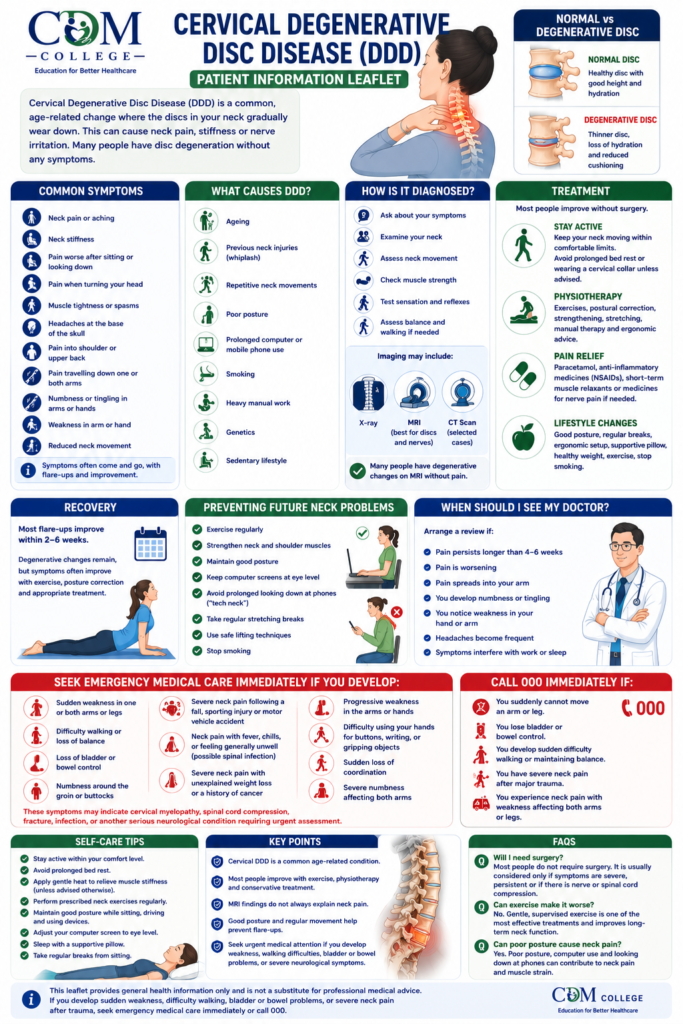
Help Shape the Future of Healthcare
Your donation enables CDM College to educate healthcare professionals, develop evidence-based learning, support scholarships, and improve the quality of chronic disease care for communities worldwide.
❤️ Donate Securely
Leave a Reply