

By CDM College
What is BPPV?
Benign Paroxysmal Positional Vertigo (BPPV) is the most common cause of vertigo (a spinning sensation). Although the symptoms can be alarming, BPPV is not caused by a stroke or brain tumour and is usually treatable with simple repositioning manoeuvres.
BPPV occurs when tiny calcium carbonate crystals (called otoconia) become dislodged from their normal location in the inner ear and move into one of the semicircular canals. When you change the position of your head, these crystals stimulate the balance sensors inappropriately, causing a brief episode of vertigo.
Common Symptoms
People with BPPV often experience:
- Sudden spinning sensation (vertigo)
- Dizziness when rolling over in bed
- Vertigo when looking up or bending down
- Loss of balance
- Nausea or vomiting
- Symptoms lasting less than one minute
- Normal hearing (hearing loss usually suggests another diagnosis)
What Triggers BPPV?
Symptoms commonly occur when:
- Rolling over in bed
- Getting out of bed
- Looking up at shelves
- Bending over
- Tilting the head backwards during hair washing or dental treatment
Who Gets BPPV?
Risk factors include:
- Age over 50 years
- Previous head injury
- Recent viral inner ear infection
- Migraine
- Osteoporosis
- Prolonged bed rest
How is BPPV Diagnosed?
Diagnosis is usually made by a healthcare professional using:
Dix–Hallpike Test
This simple bedside test reproduces symptoms while observing the eyes for nystagmus (rapid involuntary eye movements), helping identify the affected ear.
Treatment
The good news is that BPPV is highly treatable.
Canalith Repositioning Manoeuvres
The most commonly used treatment is the:
- Epley manoeuvre
- Semont manoeuvre (in selected patients)
These manoeuvres guide the displaced crystals back to their normal position inside the inner ear.
Many patients experience significant improvement after one or two treatments.
Self-Care Tips
During recovery:
- Move slowly when changing positions.
- Sit on the edge of the bed before standing.
- Avoid sudden head movements.
- Stay well hydrated.
- Ensure your home is free from trip hazards if balance is affected.
When Should You Seek Medical Attention?
Consult your GP promptly if:
- Vertigo lasts longer than one minute per episode.
- Symptoms persist despite treatment.
- You develop hearing loss.
- You have ringing in the ears (tinnitus).
- You experience severe headache.
- You develop weakness, numbness, difficulty speaking, double vision, or difficulty walking.
- You lose consciousness.
These symptoms may indicate a more serious condition requiring urgent assessment.
Can BPPV Return?
Yes. Around 15–50% of people may experience recurrence over several years. Fortunately, repeat repositioning manoeuvres are usually effective.
Prevention Tips
Although BPPV cannot always be prevented, you can reduce falls by:
- Exercising regularly to improve balance
- Treating osteoporosis if present
- Using good lighting at home
- Rising slowly from bed
- Removing household trip hazards
Key Take-Home Messages
✅ BPPV is the most common cause of vertigo.
✅ It is caused by displaced crystals in the inner ear.
✅ Symptoms are brief and triggered by head movement.
✅ The Epley manoeuvre is highly effective.
✅ Persistent or unusual symptoms should always be medically assessed.
Help Shape the Future of Healthcare
Your donation enables CDM College to educate healthcare professionals, develop evidence-based learning, support scholarships, and improve the quality of chronic disease care for communities worldwide.
❤️ Donate Securely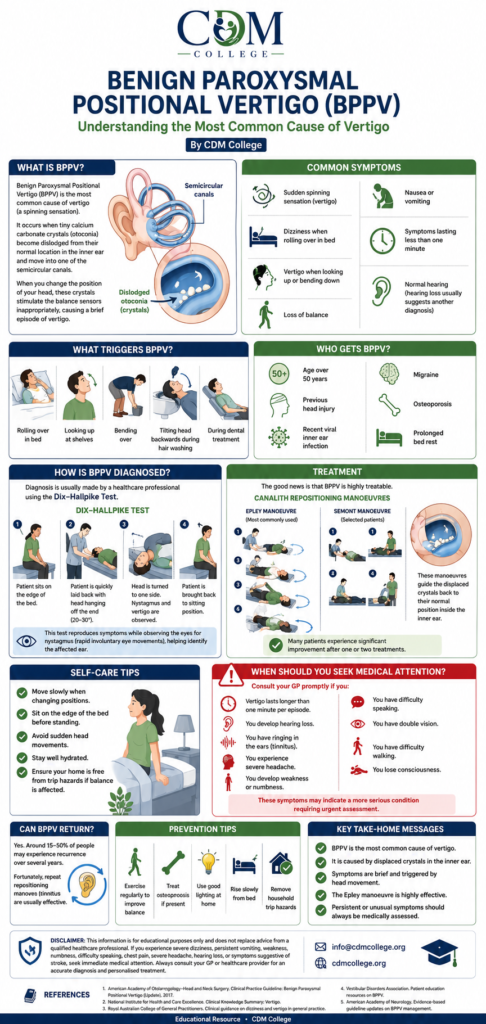
Disclaimer
This information is for educational purposes only and does not replace advice from a qualified healthcare professional. If you experience severe dizziness, persistent vomiting, weakness, numbness, difficulty speaking, chest pain, severe headache, hearing loss, or symptoms suggestive of stroke, seek immediate medical attention. Always consult your GP or healthcare provider for an accurate diagnosis and personalised treatment.
References
- American Academy of Otolaryngology–Head and Neck Surgery. Clinical Practice Guideline: Benign Paroxysmal Positional Vertigo (Update). 2017.
- National Institute for Health and Care Excellence. Clinical Knowledge Summary: Vertigo.
- Royal Australian College of General Practitioners. Clinical guidance on dizziness and vertigo in general practice.
- Vestibular Disorders Association. Patient education resources on BPPV.
- American Academy of Neurology. Evidence-based guideline updates on BPPV management.
Help Shape the Future of Healthcare
Your donation enables CDM College to educate healthcare professionals, develop evidence-based learning, support scholarships, and improve the quality of chronic disease care for communities worldwide.
❤️ Donate Securely
Leave a Reply